To estimate a diecast car's market value, identify the exact variant, average recent sold listings for that variant, then adjust for condition and provenance. Sold comps are the primary evidence; asking prices only show what sellers hope to get, not what buyers actually pay. Tools like PricexPoint can pull that sold-price evidence together quickly once you know the exact variant you're pricing.
TL;DR:
- Record the manufacturer, scale, casting, year, driver, car number, edition, and packaging codes; similar paint schemes can still represent different variants.
- Use three to six recent completed sales in comparable condition, prioritizing identical variants; if comps are scarce, widen the search and discount adjacent matches conservatively.
- Loose cars typically sell for 30% to 50% less than carded versions of the same casting, though the gap varies by brand.
- Low production alone does not guarantee a premium; documented prototypes gain more when linked to a sought after driver, race win, or verified provenance.
Table of Contents
- A quick pricing checklist you can follow right now
- How do you identify the exact variant before pricing it?
- Where should you find sold comps, and how do you weight them?
- How much does condition and packaging change the price?
- When do rarity and provenance change the math?
- What do real high-sale examples reveal about pricing?
- How do you prepare a diecast car to sell for the best price?
- How does an AI pricing tool speed up this whole process?
- Why the comps-first approach beats guesswork
- Price your diecast collection with real sold data
- FAQ
- Sources
A quick pricing checklist you can follow right now
Before you search for comps, lock down the details that make your model unique. Skipping this step is the fastest way to land on a wrong number.
- Record the maker, scale, casting or model name, year, driver, car number, livery or sponsor, edition or variant, and any serial or case code.
- Find three to six sold listings of that exact variant in a matching condition and packaging state.
- Adjust for condition, box presence, autograph or provenance, and any limited-production status.
- Set a price band with a starting ask, a realistic target, and the lowest price you would accept.
This sequence works the same way whether you're pricing a $15 mainline racer or a five-figure prototype. The difference is how many comps you can find and how much weight provenance carries.
How do you identify the exact variant before pricing it?
Two diecast cars that look nearly identical can sell for wildly different prices if one is the wrong scale, the wrong casting, or a different production run. Cross-scale comparisons are a common mistake: a 1:24 scale NASCAR diecast and a 1:64 version of the same paint scheme are not comparable items, even if the photos look alike.
- Confirm the manufacturer and scale first; mixing scales in your comp search will skew the estimate badly.
- Note the casting or model number, livery and sponsor, driver and car number, and any case code printed on the packaging.
- Identify the edition type: standard release, Elite, limited run, prototype, employee or GM-only release, or store exclusive, and record any serial number present.
- Photograph markings and packaging cues (box codes, stickers, inserts) so you can search for the exact match rather than a close guess.
To price a diecast car accurately, you need to identify the exact manufacturer, scale, casting, year, driver, and edition before comparing a single sale. Skipping this step is the single most common cause of a bad estimate.
Where should you find sold comps, and how do you weight them?
Once you know exactly what you're holding, search for completed sales rather than active listings. Marketplaces that show a final "sold" price, along with auction archives, give you real transaction data instead of a seller's wish list.
- Pull sold listings from major marketplaces and auction records, favoring those with full photo sets and any provenance notes attached.
- Use exact-phrase searches for the casting name, driver, and number; filter by timeframe and condition before widening your net.
- Expand geographically only when local comps run dry, since shipping costs and regional demand can shift realized prices.
- Weight the most recent, identical-condition sales most heavily; when data is thin, broaden your criteria and discount conservatively.
Avoid building an estimate around asking prices, unverifiable "I sold mine for" claims, or listings missing clear photos of the actual item. None of those count as market evidence. When exact comps are scarce, sourcing adjacent sales from the same scale, driver, or livery and then discounting for the differences is a standard way to reach a defensible number.
Pro Tip: Save screenshots of every sold comp you use, including the final price and date; you'll need them if a buyer questions your asking price.

How much does condition and packaging change the price?
Condition grading for diecast cars works best when you separate the model's condition from its packaging. A mint car in a crushed box is a different sale than a scuffed car in pristine packaging, and buyers price them differently depending on whether they collect to display sealed or to showcase the model itself.
- Grade the car and the packaging separately: mint-in-box, boxed with wear, loose mint, worn, or restored.
- Treat authentication documents, letters, or verified signatures as a confidence boost that often supports a higher price.
- Write honest, specific condition notes rather than vague terms like "good," since vague descriptions suppress bids.
Loose cars typically sell for 30 to 50% less than carded examples of the same casting, according to collector pricing guidance, though that range varies by brand and should never be applied blindly across different manufacturers. Precise, honest descriptions consistently raise realized sale prices because buyers bid with more confidence when they know exactly what they're getting.
When do rarity and provenance change the math?
Scarcity alone rarely creates a grail-level price. It has to pair with demand, meaning a recognizable driver, a significant race win, or a documented one-off that collectors actively compete for.
- Low production counts matter most when combined with a notable driver, a race-win livery, or a clearly documented limited run.
- Prototype and employee-only releases can command outsized sums well above standard retail, particularly when the production count is verifiably tiny.
- Provenance such as letters, receipts, or a documented auction history reduces buyer uncertainty and tends to support stronger bids.
High-value NASCAR diecast sales almost always combine a recognizable driver or race significance with genuine exclusivity rather than age by itself.
What do real high-sale examples reveal about pricing?
Looking at actual completed sales shows how identification, scarcity, and provenance stack together into a final number.
- A six-unit Dale Earnhardt prototype sold for $4,638.88 in August 2025, according to reported eBay diecast sales, illustrating how an employee-only or prototype release with a documented production count of just a handful of units can sell at several times typical retail.
- A limited-edition Elite release tied to a specific race win tends to realize its highest price when the box, the car, and any certificate of authenticity are all present and photographed clearly.
- When compiling comps, distinguish a completed "best offer" sale from an open asking price; only the final accepted amount counts as market evidence.
Treat single outlier sales like the Earnhardt prototype as exceptions rather than the baseline, useful for understanding ceiling pricing but not for estimating a typical mainline casting.
How do you prepare a diecast car to sell for the best price?
Turning a solid estimate into a strong realized sale comes down to presentation and clear communication with the buyer.
- Photograph the car and packaging from multiple angles, including any serial or case code, box dimensions, and packaging inserts.
- Write an accurate condition description and attach any provenance documents, receipts, or authentication letters.
- Choose your pricing tactic: a fixed buy-it-now price, an auction format, or a listing with a reserve, and decide in advance when you'll accept a best offer.
- Ship high-value diecast cars in a protective outer box with insurance that matches the sale price.
Pro Tip: List your minimum acceptable price privately before you post, so a lowball best offer doesn't pressure you into an answer on the spot.
How does an AI pricing tool speed up this whole process?
Running this workflow by hand across several marketplaces takes real time, especially when you're pricing a collection rather than a single car. We built PricexPoint to shorten that search without cutting corners on the evidence.
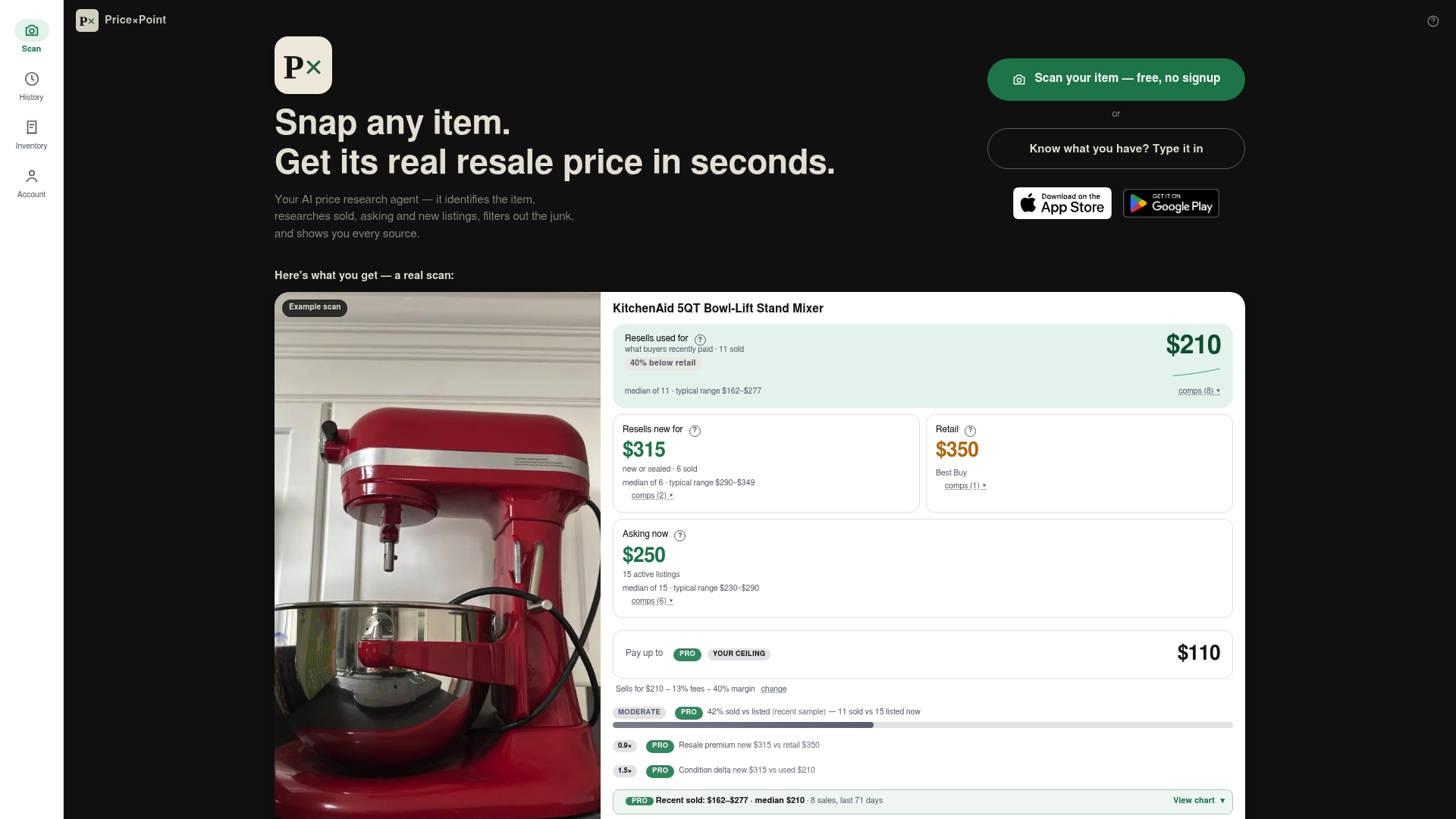
- Snap a photo or type the model name, and our app identifies the item and pulls sold, asking, and new listings across multiple marketplaces.
- Every price estimate links back to its original sold listing, so you can check the source yourself rather than taking a number on faith.
- Bulk pricing through CSV upload or multi-item photos lets resellers price a whole collection in one pass instead of searching one car at a time.
The practical benefit is hours saved and a record of sources you can hand to a buyer who asks how you landed on your price. Our AI-driven pricing approach works the same way across collectibles, not just diecast cars.
Why the comps-first approach beats guesswork
The biggest mistake we see is collectors anchoring to the highest sale they've ever heard of instead of the handful of comps closest to their own item. A $4,600 prototype sale tells you almost nothing about what your carded mainline is worth. Sold data, matched tightly to condition and edition, beats intuition every time, even when intuition comes from decades of collecting.
— PricexPoint
Price your diecast collection with real sold data
We built PricexPoint to aggregate sold listings across marketplaces and show you exactly where each price estimate came from, with a source link on every figure. Run a free lookup on your next find, or compare the Basic, Pro, and Power plans to see which fits your selling volume.
See real examples of what collectibles are currently selling for on our worth page, then price your own items with the same sold-comps evidence.
FAQ
How do I find the value of an old diecast car?
Identify the exact manufacturer, scale, casting, year, driver, and edition, then search for recent sold listings of that same variant in similar condition. Collector guides note that values are based on verified sold listings rather than asking prices, so avoid relying on what sellers are hoping to get.
Why do loose diecast cars sell for less than boxed ones?
Boxed collectors pay a premium for intact packaging because it preserves display value and resale potential. Loose cars typically sell for 30 to 50% less than carded examples of the same casting, though the exact gap varies by brand and model.
What makes a diecast car extremely valuable?
Extreme values almost always combine a very low production count with strong demand, such as a recognizable driver, a documented prototype status, or an employee-only release. A six-unit Dale Earnhardt prototype reaching $4,638.88 in a single sale shows how rarity paired with provenance drives the highest prices, far more than age alone.
Does an autograph or certificate increase a diecast car's price?
Yes, documented authenticity such as a signature with a certificate or a provenance letter tends to support stronger bids by reducing buyer uncertainty. Grading guides for collectible models recommend disclosing authentication documents clearly in any listing.
How many sold comps do I need for an accurate estimate?
Three to six recent sold listings of the exact same variant and condition generally give a reliable price range. If that many aren't available, broaden your search to the same scale, driver, or livery and apply a conservative discount for the differences.
Sources
- Vintage diecast cars: understanding their value
- NASCAR diecast cars: exploring their allure, value and signed collectibles
- Most expensive eBay diecast sales of the month: August 2025
- Diecast aircraft model grading guide for collectors