
The most reliable way to price a trading card is to match exact sold comparable sales, graded sales when available, then adjust for grade, parallel, and recent market movement. Start with grading-company price guides for a graded consensus figure, cross-check active marketplace listings for recent activity, then confirm with one linked, realized sale before you set an ask or make an offer.
TL;DR:
- Matching exact recent sales, especially graded ones, is essential for accurate card pricing, with adjustments made for market trends and condition.
- Price guides provide a useful baseline, but actual sale prices from marketplaces and auctions offer real-time market value, especially for quick-moving modern cards.
- The value difference between cards of the same grade can be significant, depending on factors like centering, surface sharpness, and whether they have been trimmed or altered.
- Timing market entries around seasonal sports or release events, along with verifying the authenticity of listings, can help avoid overpaying or underpricing.
- Using a comprehensive, transparent pricing tool that cross-references multiple sources and links directly to actual sales improves accuracy and reduces risk.
Table of Contents
- Where Price Data Comes From: Guides, Marketplaces, and Auctions
- How Grading and Condition Change a Card's Value
- Which Cards Commonly Hold Significant Value
- Using Apps and AI Tools Safely for Card Pricing
- Seasonal Fluctuations and Event-Driven Price Changes
- Common Scams and Pitfalls in Card Price Assessments
- What Actually Moves the Needle on Realized Price
- How Pricexpoint Fits Into Your Pricing Workflow
- Sources
- FAQ
Where Price Data Comes From: Guides, Marketplaces, and Auctions
Official price guides, marketplace listings, and auction results each answer a different question, and mixing them up is where most pricing mistakes start.
PSA's Price Guide lists a very large number of grade-specific prices for PSA-certified cards, updated regularly and broken out by numeric grade. That makes it a strong baseline for graded consensus values, but it reflects aggregated history, not what a card sold for last Tuesday. For that, you need completed sales.
- Price guides (PSA, CGC) give grade-specific benchmarks built from historical sales, best for a quick sanity check.
- Marketplace completed listings (eBay's sold-item search, TCGplayer) show what buyers actually paid recently, critical for modern cards and short-print parallels that move fast.
- Auction houses publish realized prices for premium pieces, useful for benchmarking the high end of a category.
- Market databases like SportsCardInvestor chart price trends over 30 and 90 day windows, good for spotting a spike or a slide before you commit to a number.
A quick credibility check: does the source show a date, a final price, and a link back to the actual listing? If a "price" has no transaction behind it, treat it as an asking price, not a market price.
How Grading and Condition Change a Card's Value
A single grade point can often separate a low-value card from a card worth several thousand dollars. The jump from PSA 9 to PSA 10 can be steep, because Gem Mint population is comparatively small relative to demand, and buyers pay for certainty as much as appearance.
PSA's grading standards also flag non-numeric conditions, things like trimming, restoration, and recoloration, that can gut a card's value regardless of how sharp it looks. A trimmed card that would otherwise grade Near Mint often sells for a fraction of an authentic raw example, because trimming is treated as alteration, not condition.
Statistic Callout: Two cards holding the identical numeric grade can still sell at noticeably different prices. PSA notes that centering and overall eye appeal create real variance even within one grade tier, so the number on the label is a starting point, not the final word.
- Check population reports for the specific grade before assuming scarcity; a "low pop" claim only matters if the count is genuinely small.
- Watch for whitening, surface scratches, and miscut edges. These are common flags that can drop a card a full grade or more.
- Grading fees make sense when a card's estimated raw value clears a meaningful multiple of the grading cost, roughly speaking. Below that, selling raw usually nets more.
Which Cards Commonly Hold Significant Value
Value tends to cluster around a few recognizable patterns rather than appearing randomly across a set.
- Vintage rookie cards of Hall of Famers, especially in high raw or graded condition, since surviving high-grade examples from decades ago are genuinely scarce.
- Scarce Pokémon cards, including early Gold Star cards and low-print 1st edition promos, where original print runs were small and English print runs, in particular, never got a large second wave.
- High-grade modern inserts and parallels with numbered print runs under 25 copies, where population reports confirm true scarcity rather than assumed rarity.
- Autographed cards and low-run parallels across any category, where the combination of signature and short print run compounds the premium.
A 1979-80 O-Pee-Chee Wayne Gretzky rookie, signed and graded PSA NM-MT 8.5, illustrates the high end of this pattern in an auction house setting. Use results like that to understand the ceiling of a category, not the median.
Using Apps and AI Tools Safely for Card Pricing
No single app or price guide covers every situation perfectly. Grading-company guides work best for slabbed cards, marketplace search works best for active demand, and database charts work best for spotting trends over weeks or months. An evidence-first tool that pulls from all three, showing you the actual sold link behind every number, closes the gap between "an estimate" and "a number you can defend."
Here's what a reliable pricing tool should give you:
- Multi-market sold data, not just one platform's asking prices.
- Transparent source links, so you can click through and verify every figure yourself.
- Bulk lookup support, useful if you're pricing a whole collection rather than one card at a time.
- Export options, so your pricing evidence doesn't live only inside an app.
Pro Tip: Never accept an app's number without clicking through to at least one linked sale. Compare the grade and population against your own card before you trust the figure. Identification can go wrong on oddball parallels or foreign-language prints, and regional price gaps are real, so a human check still matters even with a good tool.
Seasonal Fluctuations and Event-Driven Price Changes
Card prices move with the calendar as reliably as they move with a player's stat line. Sports cards tend to spike around the season opener, the playoffs, and induction announcements for the Hall of Fame, when a Hall of Fame class is announced. Cards for those players often see a short-term bump that fades within weeks.
Pokémon and Magic prices follow their own event calendar. A new set release, a reprint announcement, or a competitive tournament win by a specific deck archetype can send a single card's price up sharply, then back down once supply catches up or hype cools. Holiday season, particularly November through January, tends to lift prices across most categories as gift-driven demand pulls casual buyers into the market.
Watch for anniversary effects too. A card tied to a milestone, a 25th anniversary reprint, a record-breaking game, often sees renewed attention exactly when that anniversary hits media coverage. If you're selling, timing a listing around a genuine demand spike (not a rumor) can meaningfully improve your realized price. If you're buying, the weeks right after a hype spike fades are often when the best deals show up, since sellers who missed the peak start cutting asking prices to move inventory.
The lesson either way: a price you pulled six months ago may already be stale, especially for anything tied to an active player, a recent set release, or a seasonal buying window.
Common Scams and Pitfalls in Card Price Assessments
Bad pricing information costs collectors real money, and most of it comes from a handful of recurring traps.
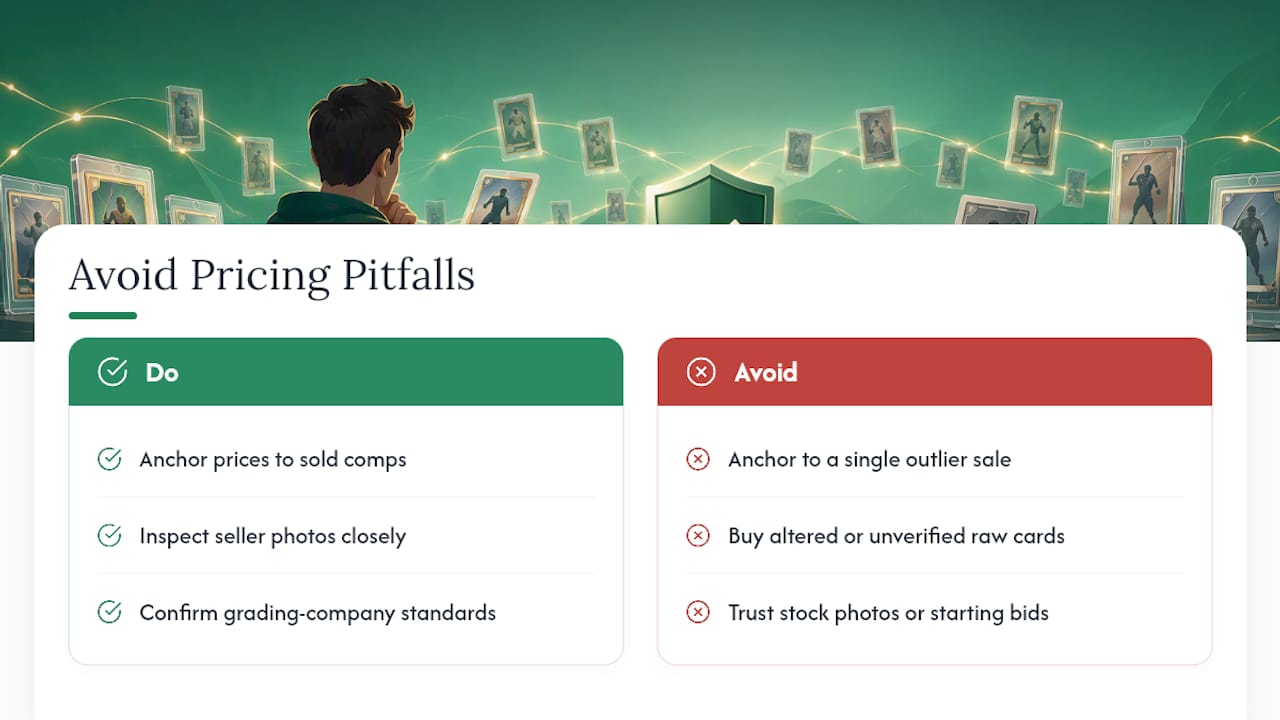
The most common pitfall is anchoring to a single outlier sale. A card that sold for triple its normal price in a bidding war between two collectors isn't a market price, it's an anomaly. Treat outlier sales as context, not as your baseline.
Altered cards passed off as authentic are a persistent problem. Trimming, re-coloring edges, and pressing out surface wear are all things graders specifically watch for and flag, which is exactly why a raw card claiming to be "near mint condition" without grading history deserves extra scrutiny before you price it at a premium.
Fake or reprinted cards, particularly in high-value vintage and Pokémon categories, show up regularly in casual marketplace listings. If a deal looks too good relative to every comp you've found, verify the seller's return policy and photo quality before trusting the price.
Watch for stock photo listings, where a seller uses a stock image instead of a photo of the actual card, and misleading "starting bid" auction prices that get read as market value when the auction never actually closed at that number. Also be wary of grading-company terminology confusion. A "9" from one grading company and a "9" from another aren't always describing the exact same condition threshold, since CGC's grading scale uses comparable but not identical criteria to PSA's.
What Actually Moves the Needle on Realized Price
Clear, honest photography beats almost every other pricing lever available to a seller. Buyers pay a premium for certainty, and a listing with sharp images of corners, edges, and surface, plus honest disclosure of any flaws, consistently closes at higher prices than a vague listing with one blurry photo.
The single biggest mistake I see collectors make is anchoring to one high sale they saw once and building an entire pricing strategy around it. That outlier probably involved two buyers who wanted the exact same card at the exact same moment. It happens, but it's not the market. Price to the median of your recent comps, not to the best headline you found.
— Ish
How Pricexpoint Fits Into Your Pricing Workflow
Pricexpoint is the alternative to guessing at a number and hoping it holds up. Instead of digging through five different sites to cross-reference a card, you photograph it or type in its name, and the app pulls sold, asking, and new listings across multiple marketplaces in seconds, filtering out the noise that leads collectors astray.
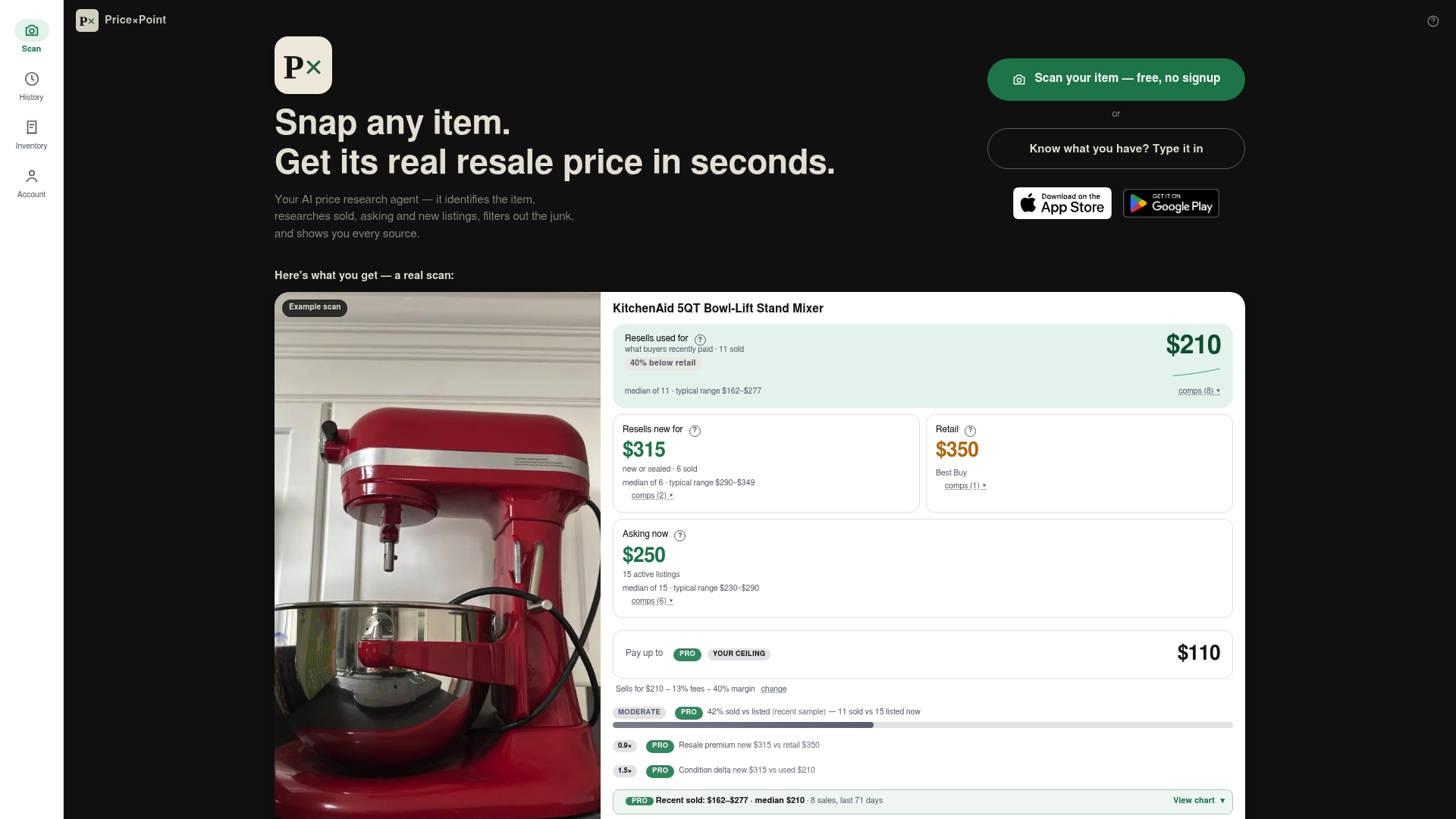
Every price estimate links back to the actual sold listing it came from, so you get the verification step built into the tool itself rather than as an afterthought. That matters most when you're pricing a whole box of cards at once. Pricexpoint supports bulk lookups through CSV upload or multi-item photos, which turns an afternoon of manual comp hunting into a few minutes of scanning. See exactly how it works before you commit to anything.
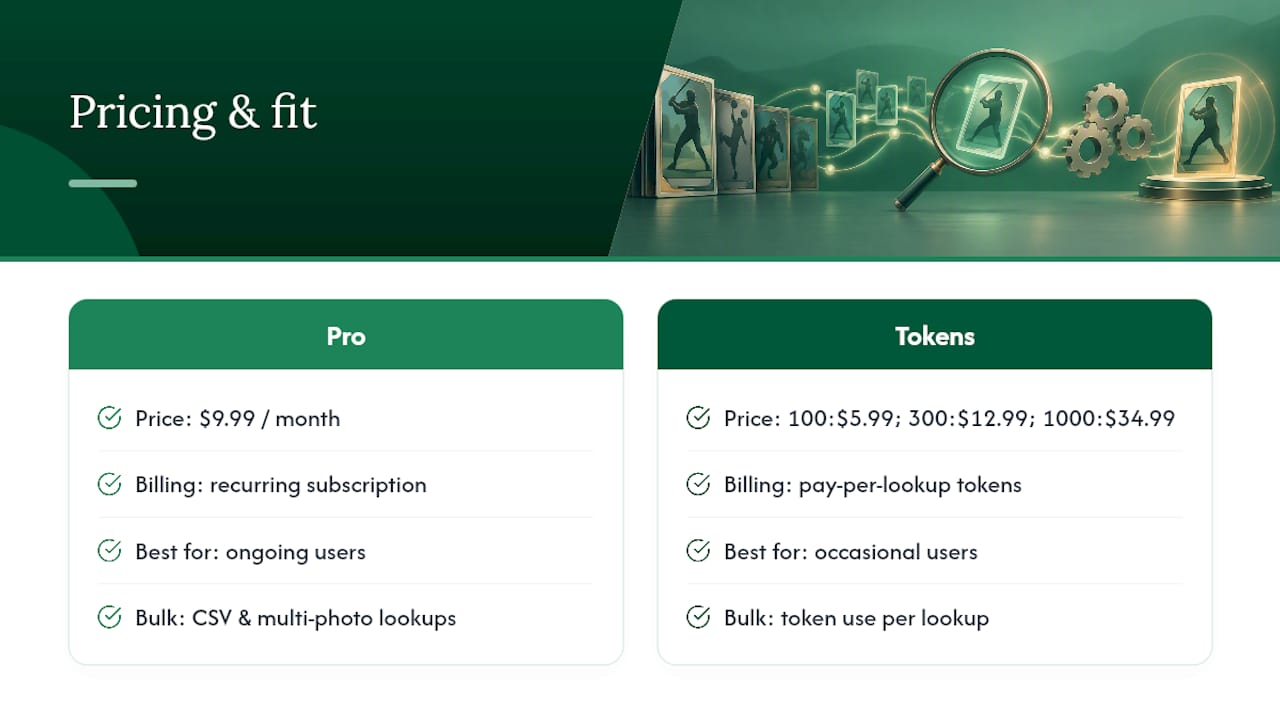
If you want to test it on a single card first, the worth pages show real sold-price evidence you can check against your own research. When you're ready for ongoing use, the Pro plan runs $9.99 per month, or you can grab a one-off token pack, 100 tokens for $5.99, 300 for $12.99, or 1000 for $34.99, if you'd rather pay per lookup than subscribe.
Sources
Pricing a card correctly is a five-step process, and skipping steps is how sellers end up underpriced or buyers end up overpaying.
- Trading Card Values - PSA Price Guide
- PSA | Grading Standards
- Sports Card Price Guide and Database
- Goldin — Wayne Gretzky signed rookie card lot
Pro Tip: Keep a simple evidence file for every card you price, a folder or spreadsheet with links, dates, and final sale amounts. If a buyer questions your price, you can show your work in seconds instead of scrambling to rebuild your reasoning.
Document every adjustment you make. Auditable pricing protects you whether you're the buyer or the seller.
FAQ
How Do I Find Out the Value of My Trading Cards?
Identify the exact set, year, and parallel, then search for recent sold comps at the same grade or condition. Cross-check against a price guide like PSA's Price Guide for a graded baseline, and treat any figure without a linked sale as unverified.
What Is the Best Way to Price Trading Cards?
Match exact sold comparable sales first, graded sales if your card is slabbed, then adjust for parallel, print run, and recent market movement. Avoid pricing off a single outlier sale or an unsold asking price.
What Trading Cards Are Worth Money?
Vintage rookie cards of Hall of Famers, scarce early Pokémon promos, low-population modern parallels, and high-end autographs tend to hold the most value. Scarcity confirmed by population reports matters more than a card simply looking old or rare.
Is There an App to Price Trading Cards?
Yes. Pricexpoint identifies a card from a photo or its name and pulls sold, asking, and new listings across multiple marketplaces with links back to the source for verification. It also supports bulk pricing through CSV upload, which helps when you're pricing an entire collection rather than one card at a time.