
The most reliable way to price a vinyl record is to check recent sold listings for that exact pressing, grade the record conservatively using the Goldmine standard, and adjust for edition and fees before you set an ask. Vinyl demand has kept climbing, so some titles now carry higher baseline values than sellers expect. Skip the sold-comp step and you're guessing.
TL;DR:
- A Very Good copy typically sells for about one quarter of a Near Mint copy, while Good or poorer grades can fall much lower.
- Match sold listings from six to 12 months ago by pressing and grade; if prices differ by over 30%, choose the lower one.
- Subtract fees and shipping from the closest comparable sale, then revisit your ask if the record remains unsold after two to three weeks.
- For rare or historically significant records, verify matrix and edition details, then check auction records, where documented provenance can reset expectations.
Table of Contents
- A quick price checklist you can finish in under 10 minutes
- What actually moves a record's price
- Where to find real sold prices, not just asking prices
- Price bands and the market trends behind them
- How to price and list a record from comps to final ask
- How PriceXPoint speeds up the sold-price workflow
- What we're watching in the vinyl market next
- Get a sold-price answer for your record in seconds
- FAQ
- Sources
A quick price checklist you can finish in under 10 minutes
Before you touch a pricing field, gather the details that actually move a sale.
- Photograph the label, the matrix or runout etching, the sleeve seams, and any inserts or obi strips.
- Identify the catalog number, pressing plant, and edition clues like colored vinyl or a promotional stamp.
- Search for sold comps only, filtered to the last six to 12 months and a matching condition grade.
- Grade the record conservatively against the Goldmine standard rather than your first impression.
- Subtract expected marketplace fees and shipping costs from the comp price to set a realistic ask.
- For anything that looks rare or historically significant, check auction house records before listing.
Pro Tip: When two comps disagree by more than 30%, trust the lower one, since overpricing kills visibility faster than underpricing kills profit.
What actually moves a record's price
Condition does more to determine value than almost any other factor. The Goldmine grading guide sets the standard scale: Mint, Near Mint, Very Good Plus, Very Good, Very Good Minus, Good, and Poor or Fair. A copy graded Very Good typically sells for around a quarter of what a Near Mint copy commands, and Good or worse can drop to a small fraction of that, which is why two copies of the same pressing can list hundreds of dollars apart.
Beyond condition, a handful of signals separate a common copy from a valuable one:
- First pressings, especially those tied to the original matrix number, usually outvalue later repressings.
- Country-specific variants, including import copies with obi strips, often carry a premium among collectors who chase original regional releases.
- Promotional or stamped copies and factory-sealed records can price well above standard stock copies of the same title.
- Rarity only matters alongside demand: a short pressing run from a cult artist with an active collector base will outprice a larger run from a less-followed act.
Vinyl's broader rebound is also reshaping baselines: vinyl revenues rose 13.7% in 2025, marking a 19th consecutive year of growth, which has pushed more buyers into the market for mid-tier records that used to move slowly.
Provenance can push a record into an entirely different bracket. The Jim Irsay Collection results at Christie's generated more than $94 million, a reminder that ownership history and cultural significance can rewrite a price ceiling, even if that scale applies to a tiny sliver of the market.

Where to find real sold prices, not just asking prices
An asking price tells you what a seller hopes to get. A sold price tells you what a buyer actually paid, and that gap can be enormous for inflated listings sitting unsold for months.
- Check completed and sold listings on general marketplaces, filtering specifically for "sold" rather than active listings.
- Narrow results to the past six to 12 months for common titles, since older solds reflect a market that may have shifted.
- Match the condition grade of your comp as closely as possible, since a Near Mint comp says nothing about a Very Good copy's value.
- Reserve auction house records for high-end or provenance-rich lots, where buyer premiums, taxes, and shipping can add a meaningful percentage on top of the hammer price.
For collectors weighing valuation accuracy across categories, the same sold-comp discipline applies well beyond music. A watch valuation accuracy guide makes a similar case for pre-owned luxury pieces: relying on asking prices instead of verified sales routinely causes a pricing error of 10% to 20%.
Price bands and the market trends behind them
Vinyl pricing splits into rough bands, and grading is what moves a record between them. A bargain-bin common pressing in Good condition might sell for a few dollars, while the same title in Near Mint can land solidly in mid-market territory. True collector pieces, first pressings, colored vinyl, or promo copies, sit above that, and auction-level outliers occupy a bracket of their own that shouldn't guide routine pricing decisions.
| Price band | What typically lands here | Grading context |
|---|---|---|
| Bargain | Common pressings, worn condition | Good to Very Good Minus |
| Mid-market | Standard reissues, decent condition | Very Good to Very Good Plus |
| Collector | First pressings, promos, colored vinyl | Near Mint |
| Auction-high | Provenance pieces, cultural rarities | Sealed or Mint with documented history |
The baseline for all four bands has shifted upward. US recorded music revenue hit $6 billion in the first half of 2026, with physical revenue up 25.9% and vinyl growth of 17.7%, a pace that has made even modest pressings more liquid than in past years. Auction results like the Irsay sale sit outside this framework entirely and shouldn't be used to price a routine listing.
How to price and list a record from comps to final ask
Once you've pulled sold comps and settled on a grade, the listing itself determines whether that price actually gets paid.
- Pick the sold comp closest to your record's grade and pressing, not just the title.
- Subtract marketplace fees and estimated shipping from that comp to land on a realistic ask.
- Shoot clear photos of the label, runout etching, sleeve seams, and any inserts or obi strips.
- Write a description that states the grade plainly, including any visible wear you'd want disclosed to you as a buyer.
- Choose a fixed price for common titles and consider an auction format for rare or contested pieces.
- Set a relisting plan: if a record doesn't sell in two to three weeks, revisit the comps rather than just re-posting at the same price.
Pro Tip: Grade one notch more conservatively than your instinct says, since a buyer who receives a record that matches or beats the stated grade rarely files a dispute.
Buyers benefit from the same patience sellers need. A guide on timing sold-price checks built around sneaker resale makes a point that applies here too: prices for recently trending items can swing within days, so a short wait before committing to a number often pays off.
How PriceXPoint speeds up the sold-price workflow
Running the checklist above by hand across multiple marketplaces takes real time. We built PriceXPoint to compress that research into seconds.
- Our app identifies a record from a photo or a typed name, then pulls sold, asking, and new listings across multiple marketplaces at once.
- We filter out unreliable or misleading listings so the price range you see reflects real transactions, not inflated asks.
- Every price we show links back to its source listing, so you can verify the comp yourself instead of trusting an unexplained number.
- Scan history saves automatically, which matters when you're pricing a whole collection rather than one record at a time.
The same approach works outside music: our case study on pricing collectibles with real sold prices and our walkthrough on pricing stamps with AI and auction data both apply this identical sold-comp logic.
What we're watching in the vinyl market next
Vinyl's growth streak isn't slowing, and that changes how patient sellers should be with pricing. Two signals are worth tracking: reissue announcements, which can quietly deflate the value of original pressings overnight, and auction house provenance sales, which periodically reset what collectors believe rare items are worth. Collector demand data, like the kind tracked in broader analyses of collector markets, consistently shows that demand concentrated around a specific scene or era moves prices faster than overall market averages. Our take hasn't changed: check sold comps, grade conservatively, and let the evidence set your number.
— PricexPoint
Get a sold-price answer for your record in seconds
Running through sold comps, grading standards, and fee math manually works, but it's slow when you're pricing more than a record or two. We built PriceXPoint to do that research for you: snap a photo or type in the title, and we pull sold, asking, and new listings with a link back to every source.
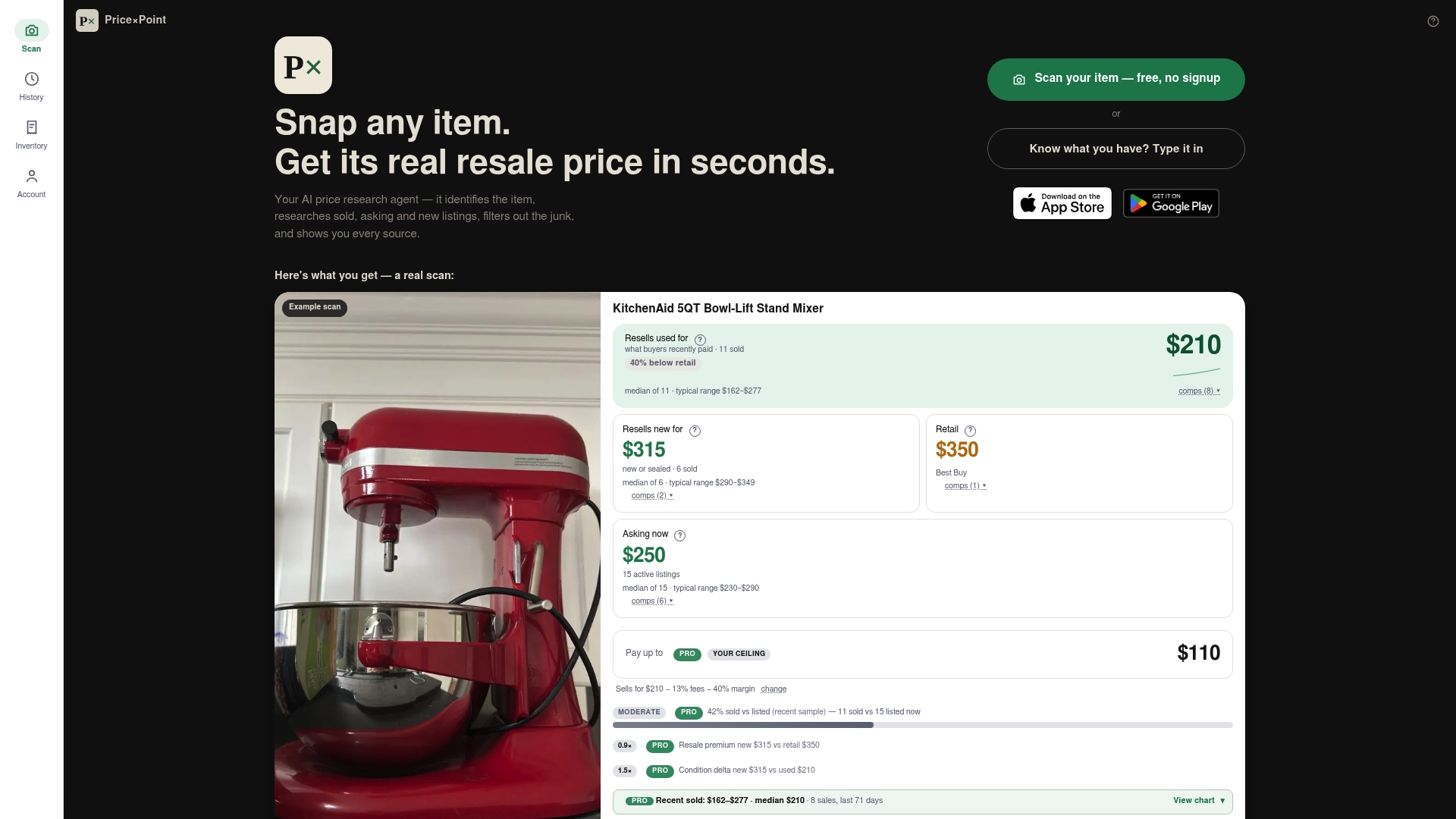
- See real examples of how we display sold-price evidence on our worth page.
- Read how we compile and verify pricing data before it ever reaches your screen.
- Compare our Basic, Pro, and Power plans, starting at $4.99 per month, or grab a one-off token pack if you only need a handful of lookups.
Start with a free scan and see what your collection is actually worth right now.
FAQ
What are the most valuable vinyl records?
The most valuable vinyl records tend to be rare first pressings, limited promotional copies, or sealed originals from highly collected artists, and provenance can push prices into extraordinary territory, as seen in the Jim Irsay Collection results at Christie's. There's no single universal list, since value depends on pressing details, condition, and which collector base is actively buying at a given time.
What is a fair price for vinyl records?
A fair price matches recent sold listings for the same title, pressing, and condition grade, not the asking price you see on active listings. Grading conservatively using the Goldmine grading guide and subtracting expected fees from your best comp gives you a realistic, defensible number.
How do I find out how much my vinyl records are worth?
Search sold listings, not asking prices, on marketplaces that let you filter by completed sales, and match the condition grade as closely as possible. Tools like PriceXPoint can shortcut this by identifying a record from a photo and pulling linked sold comps automatically, which saves the manual search and filtering steps.
How do you know if vinyl records are worth money?
Check the pressing details first: catalog number, matrix or runout etching, and any edition markers like colored vinyl, an import obi strip, or a promotional stamp. If a quick search of sold comps for that exact pressing shows consistent demand above typical bargain-bin prices, the record likely holds real resale value.
Sources
- GLOBAL MUSIC REPORT 2026: GLOBAL RECORDED MUSIC REVENUES GROW 6.4% AS RECORD COMPANIES DRIVE INNOVATION - IFPI
- RIAA Reports $6 Billion In Mid-Year Recorded Music Revenue, With Growth Across Every Major Category - CelebrityAccess
- Record grading 101: Understanding the Goldmine grading guide - Goldmine
- The Jim Irsay Collection results — Christie's