A stamp's market price equals what recent buyers actually paid for similar-condition examples, adjusted for provenance and where the sale happened. Catalogue listings give you a reference point, not a verdict. The fastest way to check reality is pulling recent realized prices from sold listings or running a quick AI-assisted lookup, then correcting for condition and sale channel before you trust the number.
TL;DR:
- Condition factors such as centring, gum quality, and perforations can cause a stamp's value to vary by a factor of five or six, even among similar copies.
- Rarity, provenance, postal history, and demand cycles also significantly influence a stamp's market price, often outweighing catalogue estimates.
- Accurate self-estimates require precise identification, honest grading, recent sold prices, and adjustments for sale context; AI tools can expedite this process.
- Professional valuation or certification is essential for rare, high-value, or questionable stamps, especially when provenance or authenticity is uncertain.
- Online marketplaces and auction houses serve different needs depending on rarity and urgency, with digital tools providing quick preliminary assessments for large collections.
Table of Contents
- What Actually Drives a Stamp's Resale Price
- How Do You Estimate a Stamp's Value Yourself?
- When Should You Pay for a Professional Valuation?
- Where Should You Sell: Auction, Dealer, or Marketplace?
- Preparing Your Stamps Before Valuation or Sale
- Digital Tools Speed Discovery, but Experts Still Verify Rarity
- Get an Instant Price Check Before You Contact a Dealer
- Sources
- FAQ
What Actually Drives a Stamp's Resale Price
Two stamps from the same sheet can sell for wildly different amounts, and condition is usually the reason. Centring, gum quality, perforations, tears, and thins each pull value in a different direction, sometimes by a lot.

Dealers who price stamps for a living say condition differences, especially gum state and centring, can shift prices by a factor of five or six between comparable copies. That is not a rounding error. It is the difference between a stamp worth $20 and one worth $120.
Beyond condition, several other forces move price:
- Rarity and printing variety. A shifted perforation, a color error, or a scarce plate variety can turn an ordinary-looking stamp into something specialists chase.
- Provenance and ownership history. A stamp with a documented pedigree, especially one tied to a named collection, commands a premium buyers won't pay for an unknown copy.
- Postal history and covers. A stamp still attached to its original envelope, complete with postmark and route, can be worth far more than the same stamp cut loose. Some covers carry value from the rate or route alone, not the stamp.
- Demand cycles. Collecting themes go in and out of fashion. What sold briskly a decade ago can sit unsold today, and vice versa.
The record-setting example is the Inverted Jenny, where rarity and provenance combined to produce a $2 million realized price at auction. Most collections will never touch that territory, but the same logic applies at every price point: catalogue value tells you what a stamp might list for. Realized sales tell you what it actually sold for, and that gap is often significant. Use catalogues to identify and rank material. Use sold prices to set your expectations.
How Do You Estimate a Stamp's Value Yourself?
You don't need a dealer on speed dial to get a defensible price estimate. You need a method, and most collectors skip the first step.
- Identify the stamp precisely. Get the catalogue number, issue year, and perforation measurement right before you search for anything. Two stamps that look identical to the naked eye can carry very different values if one has a perforation variant the other doesn't.
- Grade the condition honestly. Photograph the front and back under good light, note gum state, check for thins by holding the stamp up to light, and record any tears or creases. Write it down. Memory is unreliable when money is involved.
- Pull recent sold prices, not asking prices. Search completed auction results and marketplace sold listings for the same catalogue number in comparable condition. Asking prices tell you what a seller hopes for. Sold prices tell you what a buyer actually paid.
- Adjust for condition and channel. A sold price from a specialist auction with buyer's premium built in doesn't translate directly to a peer-to-peer marketplace sale. Scale your estimate accordingly.
- Speed up steps three and four with an AI-assisted lookup, then verify anything that looks unusually valuable in person before you act on the number.
Pro Tip: Save screenshots of every sold listing you use for comparison, with the date and platform noted. If you ever need to justify your asking price to a buyer or consign to an auction house, that paper trail does the talking for you.
Tools that compile sold, asking, and new listings across marketplaces can compress a task that used to take an evening into a few minutes. That speed matters most when you're triaging a large collection and need to know which twenty stamps deserve a closer look.
When Should You Pay for a Professional Valuation?
Most everyday material doesn't need a paid opinion. High-value or questionable items usually do.
Dealers who plan to act as your selling agent will often value your stamps for free, since they profit from the eventual sale. Independent certification, where nobody has a stake in the outcome, typically comes with a fee. Expert committees such as the Royal Philatelic Society London publish fee schedules for authentication opinions and certificates, and those fees scale with the complexity of the item, not just its value.
Here's when the expense is worth it:
- You suspect regumming, a repair, or a reperforation that isn't obvious under a loupe.
- The item could be a genuine rarity, and a certificate would unlock a materially higher price.
- Provenance is unclear and you need documentation before a buyer or auction house will take it seriously.
- You're consigning something valuable enough that a certificate changes which auction house will accept it.
Certification exists to build buyer confidence, and that confidence shows up directly in the final price for genuinely rare items.
Where Should You Sell: Auction, Dealer, or Marketplace?
The right channel depends on what you're holding and how fast you need cash.
Auction houses are built for rare, high-value material. They typically take items on consignment and charge seller commissions that can run 20% or higher, but they also reach the buyers most likely to pay top price for something scarce. Expect weeks to months between consignment and payment, not days.
Dealers move faster. They'll usually buy outright at a wholesale price below both catalogue and retail value, which is why a single stamp often carries three different numbers depending on who's quoting it. That's not dishonesty. It reflects what a dealer needs to mark the item up and still turn a profit.
- Online marketplaces work well for common material with steady demand, though listing fees and buyer expectations around grading vary by platform.
- Local stamp clubs and dealer tables suit small lots or bulk common stamps where shipping and listing time aren't worth the return.
- Get more than one quote before committing, especially for anything you suspect is scarce. Dealers price the same item differently depending on their current inventory and customer base.
Preparing Your Stamps Before Valuation or Sale
A little preparation before you contact a dealer or list an item saves everyone time and protects value you didn't know was there.
- Photograph or scan every item, front and back, at high enough resolution that an appraiser can judge centring and gum condition without holding the physical stamp.
- Gather provenance paperwork. Old auction receipts, prior certificates, and exhibition records all add credibility and can move the final price up.
- Leave covers intact. A stamp on its original envelope can be worth far more than the stamp alone because of the postmark or route. Never soak or remove a stamp from a cover unless someone who knows what they're looking at has told you it's safe.
- Annotate your collection with catalogue numbers and condition notes, and if you're pricing dozens or hundreds of items, look for a tool that supports bulk export so you're not retyping the same data three times.
Digital Tools Speed Discovery, but Experts Still Verify Rarity
AI-assisted pricing tools have changed how fast a collector can get a baseline number, and that's a genuine shift from a decade ago when you'd wait for a dealer's callback or dig through printed catalogues by hand. But speed and authentication are different jobs. A tool can tell you what similar stamps sold for last month. It can't tell you if the stamp in your hand has been regummed or reperforated, and for anything that might be genuinely rare, that distinction is the whole ballgame.
Our take at PricexPoint: use fast, aggregated pricing to triage a collection, and reserve paid, in-person expertise for whatever the triage flags as worth the extra scrutiny. That's not a limitation of the technology. It's just what each tool is actually for.
— PricexPoint
Get an Instant Price Check Before You Contact a Dealer
Chasing sold listings across five different marketplaces takes real time, and most collectors don't have an evening free every time they want to check a value. Some AI-assisted apps can pull together sold, asking, and new listings across multiple marketplaces, filtering out unreliable data to provide evidence-linked price estimates rather than guesses.
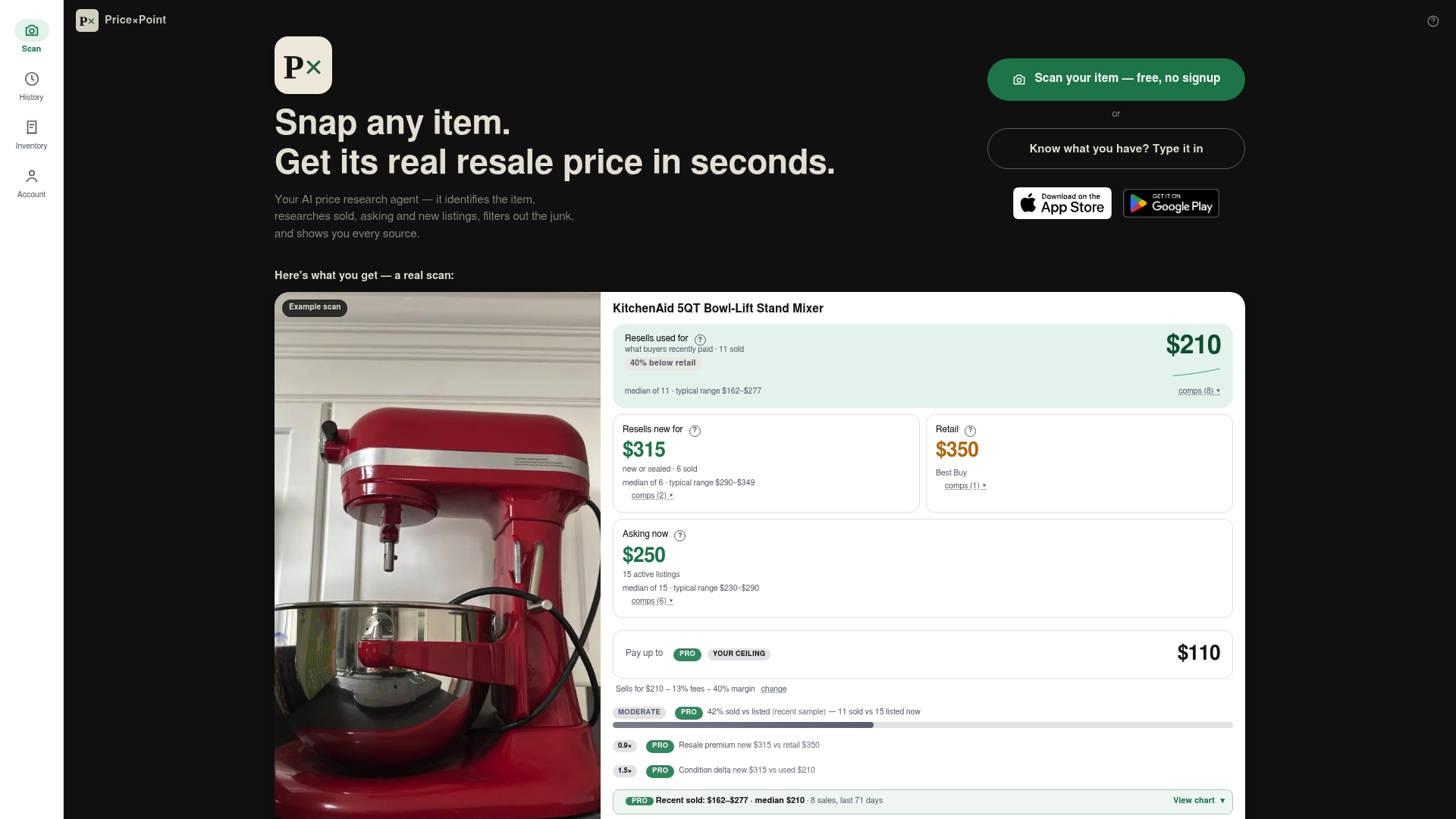
That makes it a genuinely useful first pass before you contact a dealer, request an auction consignment, or decide which items in a large collection deserve professional certification. It's also built for batches. If you're pricing an entire box of stamps rather than one item, bulk lookup through photos or a CSV saves you from doing the same search fifty times over. You can see how the underlying data works on the how it works page, browse real examples of sold-price lookups on the worth page, or check current plans starting at $4.99 a month on the pricing page if you want ongoing access rather than a one-off token pack.
Sources
- How to value a stamp collection: a beginner's guide
- SELLING & VALUING STAMPS
- Experts – Pricing and Payments
- A Rare ‘Inverted Jenny’ Stamp Sold for a Record-Breaking $2 Million at Auction
FAQ
How Do I Know if My Stamp Is Actually Rare?
Rarity usually comes down to print run size, surviving quantity, and whether a printing variety or error exists on that specific issue. A catalogue entry will flag known varieties, but confirming genuine rarity on a specific copy often requires an expert committee opinion, especially before a high-value sale.
Why Does My Stamp's Catalogue Value Differ So Much From What Dealers Offer?
Catalogue prices are reference figures, not guaranteed sale prices, and many collectors never pay full catalogue value. Dealers also quote a wholesale price below both catalogue and retail because they need margin to resell the item profitably.
Should I Remove a Stamp From an Old Envelope Before Selling It?
No. Covers with intact postmarks and routes can be worth substantially more than the stamp alone, and removing a stamp can destroy that value permanently. Leave any cover intact until an expert has assessed it.
How Much Does It Cost to Get a Stamp Certified?
Fees vary by complexity and the issuing body, and organizations like the Royal Philatelic Society London publish their own fee schedules for opinions and certificates. Dealers acting as your selling agent will often value items for free, while independent certification typically carries a separate charge.
Can an App Really Give Me an Accurate Stamp Price?
An AI-assisted tool like PricexPoint can aggregate sold, asking, and new listings across marketplaces to give you a fast, evidence-linked estimate for common and mid-value stamps. For genuinely rare or high-value items, that estimate is a useful starting point, but a physical expert inspection or committee certificate still carries more weight for the final sale price.