
"Comps" is short for comparables: similar items or sales used as a reference point to estimate what something is worth right now. You'll run into the term in several places: real estate (comparable home sales), collectibles and resale (sold listings for similar items), and business or retail (comparable company data or same-store sales). This guide walks through all three.
TL;DR:
- Choose real estate comps from the same neighborhood and school zone, with closely matched size, condition, amenities, and recent sale dates.
- Use verified sold prices rather than asking prices, adjust for property differences and seller concessions, and usually exclude distressed sales that distort typical market behavior.
- Collectible prices can vary sharply even for the same item, so match condition grade, edition or print run, and provenance before comparing sales.
- Compare several close, recent sales and adjust each price directionally for differences; use the resulting range rather than relying on one standout transaction.
- For mortgages, estate settlements, or legal disputes, use a licensed appraiser who documents the market area, comparable selection, and adjustments under recognized standards.
Table of Contents
- What does "comps" actually mean?
- How real estate comps work
- How comps work outside real estate
- How to run a quick comp check yourself
- When to trust a comp, and when to be careful
- How professionals formalize the comp process
- Why verified comps matter more than fast ones
- Find linked sold comps in seconds with PriceXPoint
- FAQ
- Sources
What does "comps" actually mean?
The word is shorthand for "comparables," and people reached for that shortcut because comparing similar things is the fastest way to answer "what's this worth?" without guesswork. The exact flavor of comps depends on the room you're standing in.
- Real estate: recently sold homes similar in size, location, and condition to the one being priced.
- Collectibles and resale: sold listings for the same or a similar item, used to set an asking price.
- Business and finance: comparable company data, where Investopedia describes comps as a tool for comparing similar entities or sales to estimate value or measure performance.
- Retail: same-store comps, which track sales growth at locations open at least a year.
Context usually makes the meaning obvious, but "comp" has other lives too. A "comp" ticket is complimentary, and getting "comped" a meal means it was free. In a workplace setting, "comp" can refer to compensation, as in a comp and benefits package. Dictionary entries like Cambridge's list these alternate senses, so when someone says "comps," check whether the conversation is about pricing, freebies, or pay.
How real estate comps work
Real estate comps follow a method appraisers call the sales comparison approach. According to the Wikipedia entry on comparables, comparables are recently sold properties similar to the subject property, and appraisers adjust their prices for differences before forming a value opinion.
The factors that matter most when picking comps:
- Location and neighborhood. A nearby home in a different school zone may not be a fair match.
- Size. Square footage, bedroom and bathroom count, and lot size need to line up closely.
- Age and condition. A freshly renovated kitchen or an aging roof changes the math.
- Amenities. Garages, pools, or finished basements count as real differences, not nice-to-haves.
- Recency. More recent sales may carry more weight than older ones, especially in a fast-moving market.
Once comps are gathered, agents and appraisers adjust each one up or down to account for differences from the subject property, a concept the Appraisal Foundation's guidance on seller concessions covers in detail, including how financing incentives and seller-paid closing costs can skew a sale price if left unadjusted. Distressed sales, foreclosures, and bank-owned properties often get set aside entirely because they don't reflect typical market behavior.
Pro Tip: When building a quick comp set, prioritize verified sold listings over asking prices, and try to find several comps before drawing any conclusion.
How comps work outside real estate
The same logic shows up well beyond housing.
- Collectibles: sold-listing comps for trading cards, coins, or vintage items depend heavily on condition grade, edition or print run, and provenance, since two copies of the same card can sell for very different prices based on centering or a signature.
- Business valuation: analysts use comparable company analysis, pricing a business against the multiples of similar public companies to estimate enterprise value.
- Retail: "same-store comps" measure like-for-like sales growth at locations open for a comparable period, stripping out the effect of new store openings.
Data sources and adjustment habits differ by field. A card collector checks marketplace sold listings, while a retail analyst pulls quarterly filings, but the underlying question, what did similar things actually sell for, stays the same.
How to run a quick comp check yourself
A solid comp check can be done with a clear method.
- Define your subject. Note its key attributes: size, model, condition, neighborhood, edition, whatever applies.
- Collect recent sold listings. Verify the source and the sale date for each one; asking prices don't count.
- Narrow to a set of close comps. Note how each one differs from your subject.
- Adjust directionally. Nudge each comp's price up or down based on those differences, then settle on a price range rather than a single number.
Document where each comp came from. A range or an average across several sales is far more reliable than leaning on one standout sale, a principle that applies whether you're pricing thrift store finds or pricing trading cards.
Pro Tip: Save your searches and keep links to the sold listings you used. It turns a one-time comp check into a repeatable process the next time you price something similar.
When to trust a comp, and when to be careful
Not every sold listing deserves equal weight. Look for these signals before leaning on a comp:
- A verified sold listing, not just an asking price or pending sale.
- A recent sale date, ideally within the last few months in an active market.
- An arm's-length transaction between unrelated parties.
- A comp from the same neighborhood or market segment.
- Documented sale conditions, including any financing concessions.
Red flags include old sales, auction-only results, estate sales, or deals with unusual seller concessions baked in. Lean on multiple comps and document your sources, and for anything with real money on the line, like a mortgage or a legal dispute, a licensed appraiser is the right call.
How professionals formalize the comp process
What separates a quick comp check from a professional appraisal is rigor. Licensed appraisers define a specific market area and follow recognized standards, including USPAP, when selecting and documenting comparables. The Appraisal Foundation's advisory on seller concessions discusses identifying, verifying, and adjusting comparable sales with documented reasoning.

That level of formality matters for mortgages, estate settlements, and legal proceedings. For everyday pricing decisions, a careful, well-documented comp check is usually enough, but it's worth knowing the difference exists.
Why verified comps matter more than fast ones
Bad comps lead to bad deals: overpriced listings that sit, underpriced sales that leave money on the table, disputes that drag on. The fix isn't more data, it's data you can trace back to a real, documented sale. Tools that link directly to sold listings and let you save past scans turn a one-off guess into a habit you can repeat with confidence.
— PricexPoint
Find linked sold comps in seconds with PriceXPoint
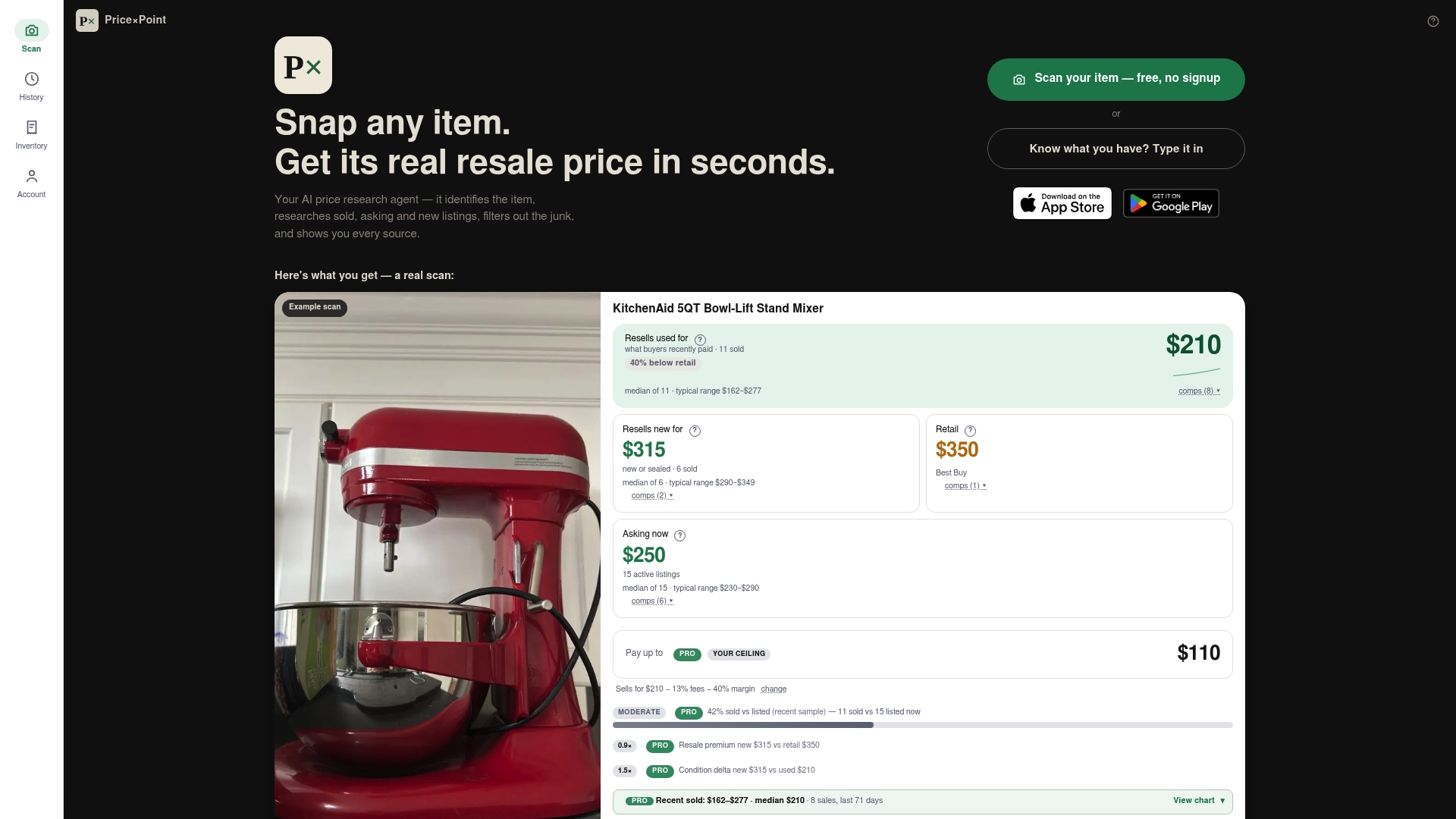
We built PriceXPoint to make comp-checking instant: snap a photo of an item or type its name, and we pull real-time sold, asking, and new listings across multiple marketplaces, linked straight back to their sources so you can verify every figure yourself. Whether you're pricing PC parts or checking what a collectible actually sold for, we filter out the noise and show you the real market. Try a live lookup on our worth page or check plans starting at $4.99 a month.
FAQ
What can comp be short for?
"Comp" can mean "comparable" (as in comps used to price something), "complimentary" (a free ticket or meal), or "compensation" (as in pay and benefits). The Cambridge Dictionary lists these and other informal senses, so context determines which meaning applies.
What are comparables?
Comparables, or comps, are similar items or recently sold properties used as a reference point to estimate value. In real estate, they're recently sold homes similar to the subject property, adjusted for differences to reach a value opinion.
What is a comp store?
A comp store, short for comparable store, is a retail location that's been open long enough to be included in same-store sales comparisons. Same-store comps measure like-for-like sales growth at these locations, excluding newly opened stores.
What does running comps mean?
Running comps means pulling recent comparable sales or listings for a specific item or property to estimate its current value. It typically involves collecting several similar sold listings, checking recency and relevance, and comparing or adjusting them to land on a price range.
Sources
- Comparables
- Understanding Comps: Definition, Uses in Analysis, and Examples
- Valuation Advisory #2: Adjusting Comparable Sales for Seller Concessions – The Appraisal Foundation