Expect entry-luxury watches to land around $3,000 to $8,000, mid-luxury pieces around $8,000 to $25,000, high-luxury models from $25,000 to $100,000, and trophy collector watches well beyond that. The fastest way to confirm where a specific watch sits is to check recent sold listings and auction results rather than asking prices, or to run it through a sold-data aggregator.
TL;DR:
- Confirm the exact reference, dial variant, and production year, then compare sales from the past six to twelve months, adjusting for condition and completeness.
- Auction estimates can miss final results, and the hammer price excludes the buyer’s premium, which commonly adds 20% to 30%; include it when comparing costs.
- Compare sales in your region; when local examples are scarce, use international results after converting currencies and accounting for premiums and import duties.
- A limited edition earns a lasting premium only when scarcity holds up in recent sold prices; launch asking prices alone can reflect temporary hype.
Table of Contents
- 1. Price ranges by tier with representative examples
- 2. What determines a luxury watch's price (practical factors to check)
- 3. Where to find reliable current prices: auctions, sold listings, and market filters
- 4. Step-by-step: verify a watch's market price using sold-data
- 5. How data-driven pricing improves accuracy
- 6. How market trends and economic factors shape watch prices over time
- 7. Impact of limited editions and collaborations on luxury watch pricing
- 8. Regional price variations in the luxury watch resale market
- 9. Author perspective: why collectors prefer sold-data now
- Try PriceXPoint to cross-check sold prices quickly
- FAQ
- Sources
1. Price ranges by tier with representative examples
Every luxury watch falls into a rough price tier, and knowing the tier before you dig into specifics saves time when you are buying, selling, or just sizing up a piece someone is trying to sell you.
- Entry-luxury ($3,000 to $8,000): steel sport and dress models from brands like Tudor, Tag Heuer, and entry-level Omega references.
- Mid-luxury ($8,000 to $25,000): core Rolex steel sport models, Omega Speedmaster Professional variants, and entry Breitling chronographs.
- High-luxury ($25,000 to $100,000): precious-metal Rolex and Omega pieces, Audemars Piguet Royal Oak references, and Patek Philippe Calatrava models.
- Trophy collector pieces ($100,000 and up): rare Patek Philippe complications, vintage Rolex references in original condition, and independent maker pieces from brands like F.P. Journe.
These ranges describe typical resale territory, not retail list prices, and they shift constantly based on condition and demand. Trophy-tier watches in particular can sell for multiples of their original retail price at auction. Phillips' New York Watch Auction: XIV totaled $75.8 million with every lot selling, and one piece realized $13.9 million, a reminder that rarity and provenance can push a watch far past what its tier would suggest on paper.
2. What determines a luxury watch's price (practical factors to check)
A watch's resale price comes down to a short list of attributes you can actually verify, rather than a feeling about the brand.
- Brand and model desirability, including how many units were produced and whether the reference is still in production.
- Condition, plus whether the original box, papers, and service records come with the sale.
- Rarity factors like limited editions, unusual case materials, and complications such as perpetual calendars or chronographs.
- Provenance, meaning documented ownership history or ties to a notable prior sale.
- The gap between MSRP, dealer markup, and grey-market pricing, which often explains why a watch resells above or below its original sticker price.
Manufacturer pricing pages, like Tudor's Ranger listing, show suggested retail prices and note that brands reserve the right to adjust them, which is useful as a baseline but tells you nothing about what the watch actually trades for on the resale market. Before buying a used or vintage piece, it helps to have someone check the movement, case, and dial condition in person rather than relying on photos alone; a practical pre-purchase inspection guide covers what to look for before you commit.
Pro Tip: Always ask for the full reference number, not just the model name, since small variations in dial color or bracelet type can shift resale value by thousands of dollars.

3. Where to find reliable current prices: auctions, sold listings, and market filters
Different sources serve different purposes, and matching the source to the watch you're pricing makes the research faster.
- Auction house press releases and sale-result pages give you hard comparables for rare and high-value pieces. Phillips' spring 2026 Hong Kong and Geneva results and Christie's Hong Kong totals show how trophy watches performed against estimates in real sales.
- Marketplace completed or sold filters work best for everyday resale models, since they reflect what buyers actually paid rather than what sellers are asking.
- Consignment dealer results help with authenticated high-value pieces, since reputable consignors typically verify authenticity before listing.
- Reading estimates versus realized prices matters because auction houses publish pre-sale estimates that frequently undershoot or overshoot the final hammer price, and the hammer price itself excludes the buyer's premium, which commonly adds 20% to 30% on top.
Treat manufacturer MSRP pages, including Tudor's Clair de Rose pricing page, as a retail reference point only. They note that suggested prices vary by region and can change, which is exactly why they make a poor stand-in for resale value.
4. Step-by-step: verify a watch's market price using sold-data
A reliable price check follows the same sequence whether you're buying or selling.
- Confirm the exact reference number, dial variant, and production year before comparing anything.
- Pull recent sold comparables from the last six to twelve months, recording the sale date, price, and any condition differences from your watch.
- Adjust each comparable up or down for completeness (box and papers), condition, and documented service history.
- Add the buyer's premium when using auction results, often 20% to 30% on top of the hammer price, and convert currencies carefully when comparables come from overseas sales.
- Treat outliers cautiously, since a single unusually high or low sale can skew your sense of the real market.
- Cross-check across at least two independent sources, or run the reference through a sold-data aggregator to reduce the bias of relying on one marketplace.
47% of new buyers at a May 2026 Christie's sale were Millennials or younger, a shift that has pushed more of the market toward transparent, data-backed price research instead of dealer asking prices.
5. How data-driven pricing improves accuracy
Pulling sold, asking, and auction records into one view cuts out the noise that comes from checking marketplaces one at a time. That kind of aggregation is the practical difference between guessing a price and confirming one.
- Faster cross-market checks, since you aren't manually opening five different sites.
- Transparent source links, so every figure traces back to an actual listing or sale.
- A consistent sold-data baseline, which keeps your comparisons apples-to-apples across searches.
For a deeper look at how this kind of aggregation works for resale pricing generally, see our breakdown of AI tools for resellers that show sold listings.
6. How market trends and economic factors shape watch prices over time
Luxury watch prices move with broader economic conditions, not just brand reputation. Interest rates, currency strength, and overall collector confidence all feed into how much buyers are willing to pay at a given moment, and auction totals tend to track that sentiment closely.
Phillips' 2026 auction seasons in Geneva, Hong Kong, and New York set multiple world records with sale totals in the tens of millions of dollars per season, a sign that demand for top-tier pieces stayed strong through the period. That strength at the top of the market doesn't always trickle down evenly. Entry and mid-luxury tiers can soften even while trophy pieces keep setting records, because the buyers chasing rare pieces are often insulated from the economic pressures affecting everyday collectors.
Currency shifts add another layer, since a watch priced in Swiss francs or Hong Kong dollars at auction can look more or less expensive to a US buyer depending on exchange rates at the time of sale. This is part of why checking recent, region-specific sold data matters more than relying on a single average price pulled from an older article or a different currency market. Watches tied to specific economic cycles, like steel sport models that became scarce during supply shortages, can also see their resale premiums shrink once production normalizes and waitlists shorten.
7. Impact of limited editions and collaborations on luxury watch pricing
Limited editions and brand collaborations tend to command a premium over the standard version of the same model, but how much of a premium depends heavily on actual scarcity and demand rather than the marketing around the release.
A true limited production run, numbered and capped at a small quantity, usually holds its premium better than a "limited" release that still ships in large numbers. Collaborations between a watchmaker and an outside brand or designer can spike resale interest immediately after launch, then cool off once the initial hype fades, especially if the underlying watch doesn't offer anything mechanically different from the standard model. Independent maker pieces, like certain F.P. Journe references, show the opposite pattern: limited runs from makers with genuinely small output tend to appreciate steadily because supply stays constrained long after release.
The safest way to judge whether a limited edition's premium is real is the same sold-data check used for any other watch: look at what comparable numbered pieces have actually sold for in the last several months, not what sellers are asking for them now. A collaboration piece that spiked at launch and then shows declining sold prices in recent months is telling you the premium was temporary, while one holding steady or climbing suggests the scarcity is real.

8. Regional price variations in the luxury watch resale market
The same reference number can sell for noticeably different prices depending on where the sale happens, and that gap comes from a mix of local demand, import duties, and currency strength rather than any difference in the watch itself.
Asian markets, particularly Hong Kong, have shown some of the strongest auction results in recent seasons, with Phillips' Hong Kong Watch Auction producing totals over HK$403 million, or roughly $51 million, with many individual lots exceeding $1 million. That kind of regional demand can pull certain references higher in Asian markets than in European or North American sales of comparable pieces. European markets, meanwhile, often price certain vintage and heritage references higher given proximity to original ownership records and manufacturer heritage programs.
For a buyer or seller, the practical takeaway is to compare sold prices within the region you're actually transacting in, not just a global average. A watch that sold for a strong price in Geneva last month doesn't guarantee the same result in a US marketplace sale, where import costs, local demand, and buyer pools differ. When comparables are thin in your own region, widening the search to international sold data still helps, as long as you convert currency correctly and account for the buyer's premium and any import duties that would apply to a cross-border purchase.
9. Author perspective: why collectors prefer sold-data now
Auction totals keep climbing and younger buyers are driving more of that growth, which tells us the market is getting more transparent, not less. Pricing, buying, or selling anything of real value now starts with sold data, not a guess.
— PricexPoint
Try PriceXPoint to cross-check sold prices quickly
Once you know what to look for, checking a watch's market value by hand across five sites gets tedious fast. We built our app to snap a photo or type in a model name and pull sold, asking, and new listing data from multiple marketplaces at once, with links back to the original source for every figure.
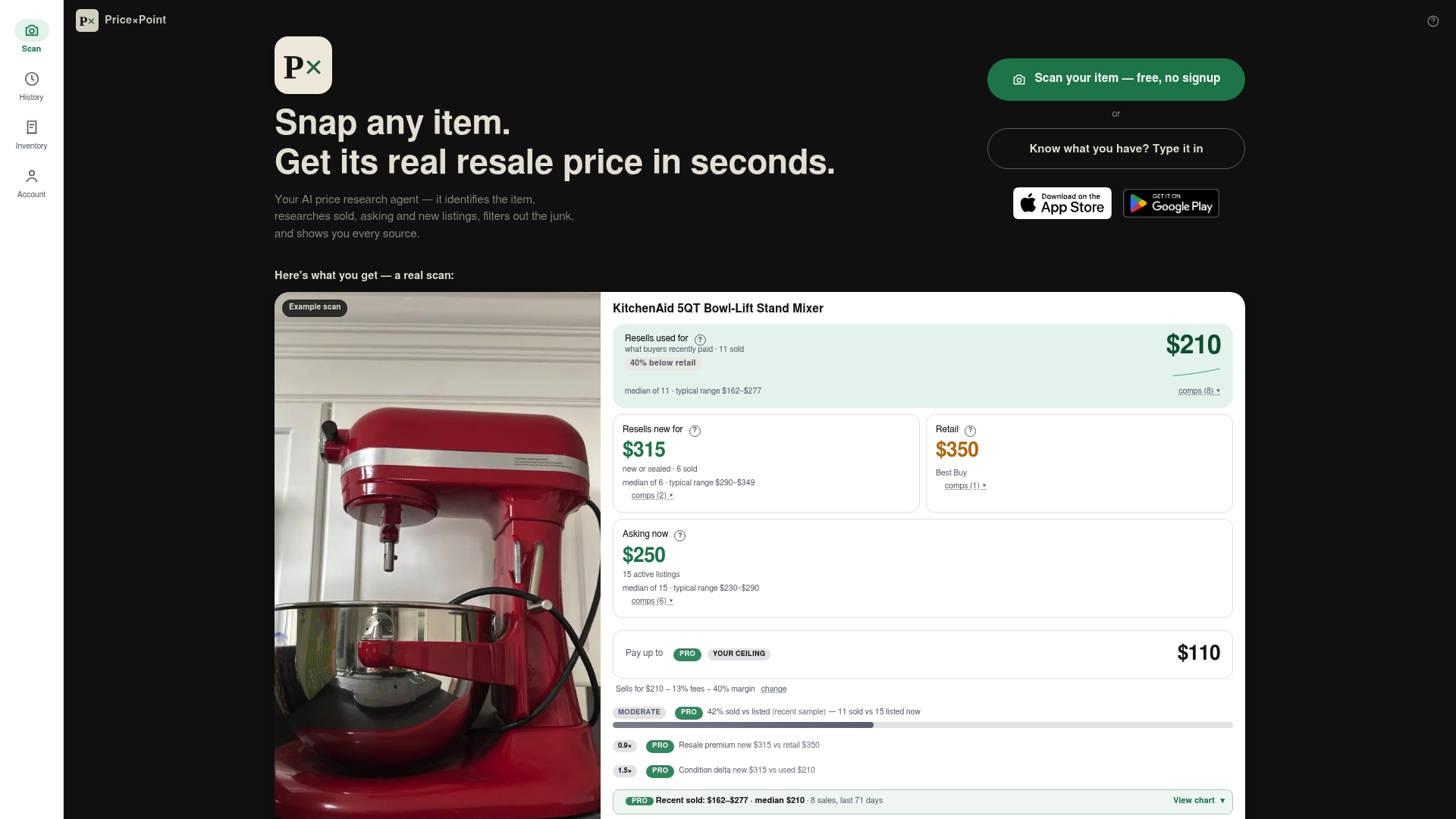
- Photo or text lookup identifies the exact reference in seconds.
- Aggregated sold and asking data from multiple marketplaces in one result.
- Source links on every figure, so you can verify the price yourself.
See a live example of how this works on our worth lookup page, or get started on our Basic plan at $4.99 a month to run checks on every watch that crosses your path.
FAQ
What are the typical prices of expensive watches?
Entry-luxury watches typically run $3,000 to $8,000, mid-luxury pieces $8,000 to $25,000, and high-luxury models $25,000 to $100,000, with trophy collector watches selling for far more at auction. Phillips' New York Watch Auction: XIV totaled $75.8 million with a top lot reaching $13.9 million, showing how far rare pieces can exceed typical retail pricing.
What is a poor man's Rolex?
The term generally refers to a watch that offers a similar look or feel to a Rolex sport model at a fraction of the price, often from brands like Tudor or Seiko. These watches aren't valued the same way at resale since they lack the brand recognition and historical price appreciation that drive Rolex demand.
What are some good affordable luxury watch brands?
Brands like Tudor, Hamilton, and entry-tier Tag Heuer models offer genuine Swiss or European craftsmanship at the lower end of the luxury tier, generally starting below typical entry-luxury prices around $3,000 depending on the model. Checking recent sold listings for the specific reference is the most reliable way to confirm current pricing before buying.
Where can I find watch auctions?
Major auction houses like Phillips and Christie's publish sale results and press releases directly on their websites, covering both upcoming auctions and realized prices from past sales. These results give the most reliable evidence for trophy and high-value watch pricing compared to secondhand summaries.
How do I verify a watch's price before buying?
Pull recent sold comparables for the exact reference number from the last six to twelve months, adjust for condition and completeness, and cross-check across at least two sources. Using a sold-data aggregator can speed this up by pulling listings from multiple marketplaces into one view with source links attached.
Sources
- Press | Phillips — Twice in six months Phillips shatters record
- Christie's press release — buyer demographics and market notes
- TUDOR Ranger product page — MSRP and pricing policy