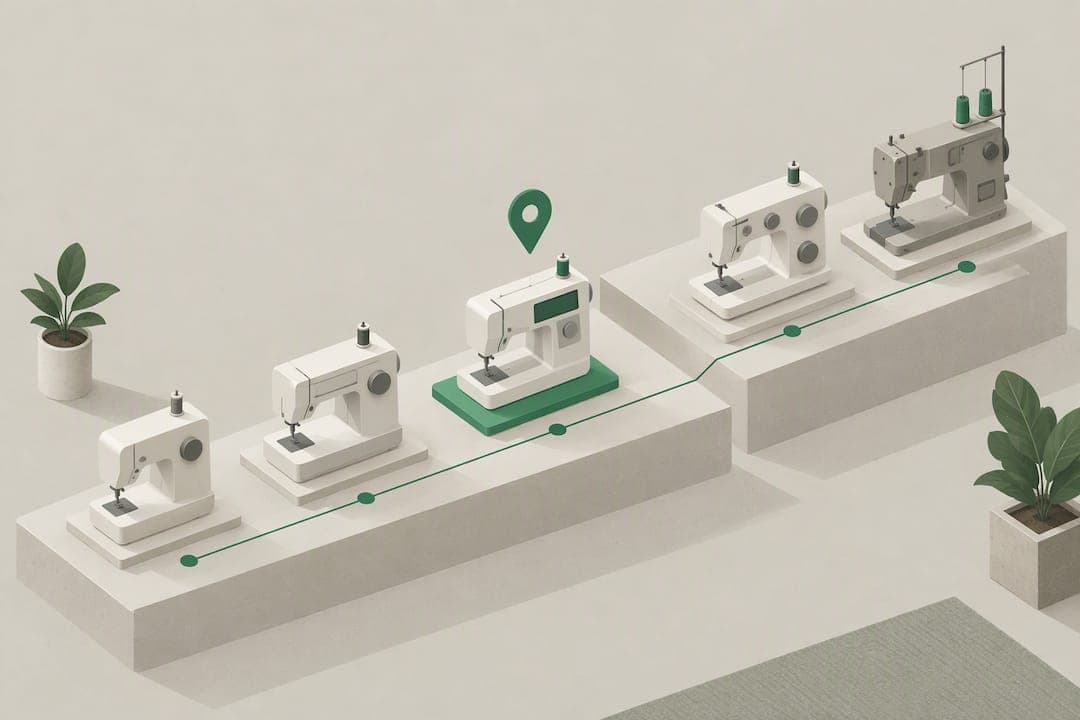
Most home sewers will find what they need between $100 and $500, with entry-level mechanical machines starting around $100 and computerized mid-range models running $200 to $400. Quilting and embroidery machines climb toward $1,500 or higher, and commercial multi-needle machines start in five figures. The Baby Lock Jazz 2, Singer Heavy Duty 4452, and Brother XM2701 illustrate three distinct tiers, and the table below lines up typical sale prices with what each model delivers.
TL;DR:
- Entry-level mechanical sewing machines typically cost between $100 and $200, with basic models suited for light home sewing and beginners.
- Mid-range computerized models, offering digital stitch selection and LCD controls, range from $200 to $500, appealing to hobbyists seeking convenience.
- Quilting and embroidery machines with larger workspace and more advanced features can reach $1,500 or higher, driven mainly by hoop size and digital capabilities.
- Used sewing machines generally sell for 40 to 250 dollars depending on condition and rarity, with potential for higher value in vintage collectibles.
- The actual price paid depends on added costs like shipping, accessories, warranty, and whether the machine is new or refurbished.
Table of Contents
- Comparing prices across five representative machines
- What drives sewing machine prices from entry level to commercial
- How to compare prices at checkout without getting fooled
- How to value a used or vintage sewing machine
- Why price transparency matters more than the sticker
- Checking real sold prices before you buy or sell
- Primary sources and where each supports the article
- Sources
- FAQ
Comparing prices across five representative machines
Street prices rarely match the sticker on the box, so it helps to see real sale examples side by side before deciding what tier fits your budget.
| Model | Typical street/sale price (example) | Best for | Standout feature | Warranty / support notes | New vs used typical range |
|---|---|---|---|---|---|
| Brother XM2701 | $100 to $150 | Beginners and light home sewing | Lightweight build with hybrid mechanical/computerized controls | Limited manufacturer warranty, standard retailer return window | New $100 to $150, used $40 |
| Singer Heavy Duty 4452 | $150 to $200 | Heavy fabrics and durable everyday sewing | High-speed motor and metal frame components | Manufacturer warranty varies by part, see Singer's product listings | New $150 to $200, used $80 to $140 |
| Baby Lock Jazz 2 Sewing and Quilting Machine | $700 to $1,500 | Quilting and mixed home sewing projects | Quilting workspace and extended stitch variety | Dealer-backed warranty and setup support, typical of specialty retailers | New $700 to $1,500, used $400 to $650 |
| Representative mid-range computerized model (example) | $250 to $400 | Sewers who want convenience and a wider stitch library | Digital stitch selection with LCD control | Standard manufacturer coverage, often one to two years | New $250 to $400, used $120 to $250 |
| Representative home embroidery-capable model | $400 to $1,800 | Hobbyist embroidery and monogramming | Hoop compatibility with built-in designs | Coverage varies widely by brand and hoop size supported | New $400 to $1,500, used $250 to $900 |
The Brother XM2701 keeps costs down by skipping an LCD screen and advanced stitch memory, which is exactly why it suits a first-time sewer more than a quilter. The Singer Heavy Duty 4452 spends its budget on motor speed and a metal interior frame rather than stitch count, a trade that pays off on denim or canvas but adds little for garment sewing. The Baby Lock Jazz 2 justifies its higher price with a wider throat space for quilting and a stitch library built for mixed projects, not just basic repairs.
A few patterns explain why price jumps happen between these models:
- Workspace size and throat depth increase cost because they require a larger frame and motor.
- Stitch count and digital memory add price through the electronics and the LCD interface.
- Hoop compatibility for embroidery raises price fastest, since it requires a separate drive mechanism.
Large retail listings confirm this spread holds across brands, not just these five. Home Depot's sewing machine category shows models ranging from about $129 to $1,399, with occasional industrial units priced higher still.
What drives sewing machine prices from entry level to commercial
Five price bands cover almost every sewing machine on the market, and each jump corresponds to a specific capability you either need or do not.
- Entry mechanical ($100 to $200): Basic straight and zigzag stitches, no digital memory, starting around $100 per Singer's own product pages.
- Mid-range computerized ($200 to $500): Typically $200 to $400, adding digital stitch selection, automatic buttonholes, and LCD screens.
- Advanced and quilting ($500 to $1,500): Larger throat space, extended stitch libraries, and features that push advanced models above $500.
- Home embroidery ($400 to $3,000): Price depends almost entirely on hoop size and how many designs are built in, since the embroidery drive mechanism is the most expensive added part.
- Commercial multi-needle (starting around $12,000): Entry multi-needle embroidery systems start near $12,000 to $13,000, with mid-tier single-head commercial systems reaching $19,000 to $22,000.
Needle and hoop capability is the single biggest price driver once you move past basic home sewing. Commercial multi-needle machines price almost entirely by head count and needle count, which is why a six-needle entry system costs roughly half of a comparable multi-head industrial unit.
Retail collections back up these bands with real listings. Home Depot's product range runs from about $129 to $1,399 across dozens of brands, confirming that the jump from entry to advanced is gradual rather than a single cliff in price.

How to compare prices at checkout without getting fooled
A low sticker price means nothing if the delivered cost ends up higher than a competing listing once shipping, tax, and missing accessories are added in. Run through this checklist before you commit:
- Confirm the exact model number and version, since retailers often sell near-identical models under slightly different names.
- Check which presser feet, bobbins, and accessories are included versus sold separately.
- Verify the warranty length and what it actually covers, not just that one exists.
- Add shipping and tax to the listed price before comparing two retailers.
- Read the return window and any restocking fee before buying based on price alone.
- Ask whether the unit is refurbished or new, since refurbished units are priced lower but carry shorter coverage.
- Check whether training or setup support is bundled in, which specialty dealers often include and big-box retailers do not.
Retailers frequently advertise savings against the manufacturer's suggested retail price rather than a prior selling price, and it is worth reading the fine print on any sale banner. Singer's own product pages note that advertised savings compare to MSRP, which is not the same as a documented price drop. A promotional financing offer can also lower the monthly payment while leaving the total cost the same or higher, so compare total cost, not just the payment plan.
Pro Tip: Screenshot the listed price and MSRP comparison before a sale ends, since the "original price" shown in a discount banner sometimes changes between visits.
How to value a used or vintage sewing machine
Pricing a used machine is less about the model name and more about where it is sold and how complete it is. ISMACS's valuation guidance explains that venue, condition, completeness, and buyer purpose change the realized price far more than rarity alone, and many 20th-century machines carry more practical utility value than collector value.
- Search for completed sales, not just current asking prices, since asking prices overstate what buyers actually pay.
- Match the comparable sale closely: same model, same attachments, similar photos, and comparable condition.
- Adjust downward for missing manuals, bobbin cases, or foot pedals, which buyers treat as red flags even on a working machine.
- Note the venue: a rare machine listed on a low-traffic marketplace can sell for less than the same machine at a specialty auction.
As a rough rubric, common used home machines from mainstream brands typically land between $40 and $250 depending on age and condition, while genuinely collectible vintage machines with documented provenance can exceed that range substantially. A seller's own case study on tracking sold prices for other collectibles, such as this Seiko 5 Automatic 7S26-01V0 valuation example, shows the same sold-comps approach applies well beyond sewing machines.
Why price transparency matters more than the sticker
Advertised discounts tell you what a retailer wants you to think you are saving, not what the machine is actually worth on the open market. Checking sold listings across more than one marketplace before paying a sale price catches the gap between a genuine deal and a inflated MSRP comparison.

Say a listing advertises a quilting machine at $750, marked down from a $1,200 MSRP. A quick check of sold listings across several marketplaces might show the same model consistently selling for $650 to $700, meaning the real savings are smaller than the banner suggests, and a patient buyer can likely negotiate or wait for a better price.
Setting alerts, checking dealer-used inventory, and confirming the final delivered cost before paying all reduce the chance of overpaying for a machine that is common on the resale market.
— PricexPoint
Checking real sold prices before you buy or sell
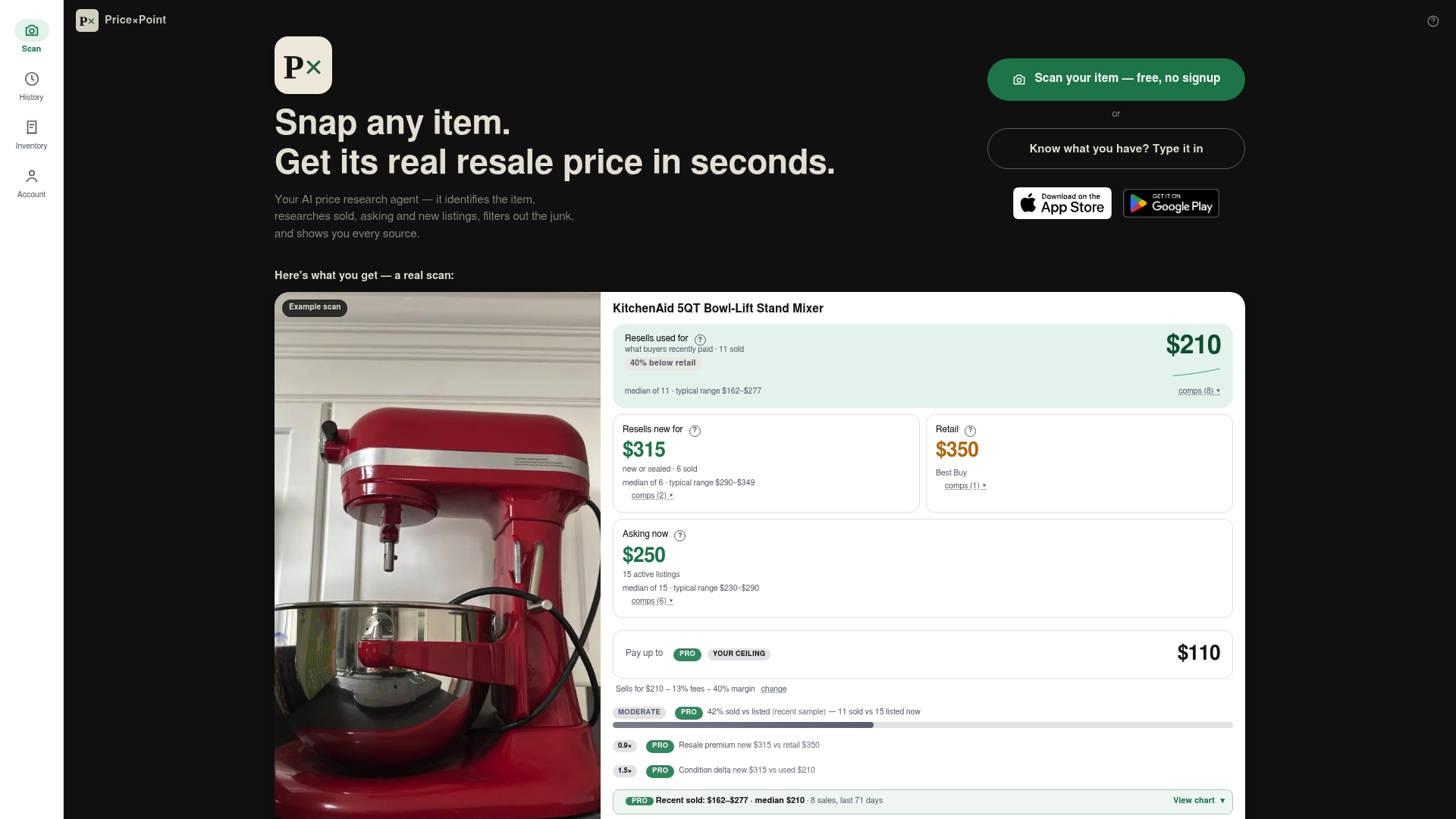
PriceXPoint identifies an item from a photo or name and pulls real sold, asking, and new listing data from multiple marketplaces, filtering out unreliable or duplicate listings so you see verified pricing instead of guesswork. For a sewing machine buyer, that means confirming whether a seller's claimed "50% off" price actually reflects recent sold comps or just an inflated MSRP comparison, the same approach used in this real sold-price breakdown for a Vitamix 5200 blender.
- Snap a photo or enter a model name to pull sold, asking, and new prices in seconds.
- Compare a seller's asking price against verified sold listings before you pay.
- Check resale value later if you decide to upgrade or sell your current machine.
Plans start with the Basic tier at $4.99 per month, with Pro and Power tiers available for heavier use, all listed on the PriceXPoint pricing page. You can also browse real sold prices on the worth page to see the kind of data the app surfaces before your next purchase.
Primary sources and where each supports the article
- Singer's product collection grounds the entry and mid-range price bands.
- ISMACS valuation guidance supports the used and vintage valuation method.
- Singer's C7250 product page illustrates the MSRP versus sale price distinction.
- Home Depot's sewing machine listings provide the broad retail price range across brands.
Sources
- Sewing Machines
- How much is my Sewing Machine Worth?
- SEWING MACHINES | Home Depot
FAQ
What is the best sewing machine for a good price?
For beginners, the Brother XM2701 offers a lightweight, affordable entry point typically priced between $100 and $150. For heavier fabrics on a similar budget, the Singer Heavy Duty 4452 adds a stronger motor and metal frame at a comparable price point.
What is the best sewing machine at a reasonable price?
The right choice depends on your project type rather than a single "best" model. A mid-range computerized machine priced around $200 to $400 suits sewers who want digital stitch selection without paying for quilting-specific workspace or embroidery hoops.
What is the best price for a home sewing machine?
Most home sewers find good value in the $100 to $500 range, which covers everything from basic mechanical machines to computerized models with expanded stitch libraries. Quilting and embroidery capability pushes the price higher, often into the $700 to $1,800 range depending on features.
What is the current price of a sewing machine?
Entry-level mechanical machines start around $100, mid-range computerized models typically run $200 to $400, and advanced or quilting machines often reach $500 to $1,500 or more. Commercial multi-needle embroidery machines sit in a much higher tier, starting near $12,000 to $13,000.