
Resale value for Le Creuset cookware comes down to condition, color and edition rarity, model, and what similar pieces have actually sold for recently, not the original retail tag. If you're buying or selling, pull several recent sold listings and document the piece's condition before naming a number. Common colors in common sizes sell predictably, while discontinued shades or limited runs can bring real premiums.
TL;DR:
- Discontinued or limited-edition colors generally command higher resale premiums than common shades like Flame, Cherry, or Cobalt Blue.
- Interior enamel damage, such as chips or crazing, significantly reduces a piece’s value, especially if the enamel’s surface is compromised.
- Heavy or large Le Creuset items are usually more profitable to sell locally or through pickup due to shipping costs and risk of damage.
- Accurately pricing requires verifying recent sold listings with the exact model, size, color, and condition, rather than relying on memory or asking prices.
- Using tools like PriceXPoint simplifies collecting real market data by aggregating sold and asking prices, with source verification, to determine a fair listing price.
Table of Contents
- Which factors most change a Le Creuset piece's resale price
- Step-by-step method to estimate a Le Creuset resale price
- Where and how to sell Le Creuset for the best net value
- How PriceXPoint helps get an evidence-backed price in seconds
- A practitioner's take on pricing discipline
- Key resources for verifying sold prices
- Get an evidence-backed price before you list or buy
- FAQ
Which factors most change a Le Creuset piece's resale price
Two pieces from the same product line can sell for very different amounts once you account for condition, color, and completeness. Buyers pay close attention to the interior enamel, since that surface takes the most abuse and is the hardest to fake a clean look on.
The main value drivers are:
- Condition: chips, crazing (fine cracks in the enamel), scorch marks, and warping all lower value, with interior enamel damage having an outsized effect even when it looks minor in photos.
- Model and size: large Dutch ovens and specialty pieces (braisers, grill pans, specific stoneware shapes) tend to hold value better than duplicate or less-used sizes.
- Provenance and completeness: original lids, boxes, and any included accessories add to the net price, and missing lids are one of the most common value-killers.
- Shipping and regional demand: heavy cast iron is expensive to ship, so local demand and pickup convenience factor into what a buyer will actually pay.
Pro Tip: Photograph the interior enamel next to a coin or ruler so buyers can judge wear at scale instead of guessing from a blurry close-up.
Step-by-step method to estimate a Le Creuset resale price
Pricing a piece accurately takes a repeatable process, not a single guess based on what you remember it costing new.
- Identify the exact model, size, and color, then note the maker mark and any date code stamped into the base.
- Measure the piece (diameter, quart or liter capacity) since size differences of even one size step change value meaningfully.
- Document condition with several high-resolution photos covering the interior, exterior, handles, and base, plus a short written flaw report.
- Search sold listings using exact model names and likely misspellings or generic terms such as "French cast iron," since underpriced listings often surface under non-brand keywords on local marketplaces.
- Filter results to completed, comparable-condition sales, not active asking prices, which tend to run higher than what items actually sell for.
- Calculate net proceeds by subtracting shipping, packaging, and marketplace fees from the gross comparable price.
Before listing, confirm you have:
- Exact model name, size, and color documented.
- Photos of maker marks, interior enamel, and any flaws.
- A net price range based on at least three recent sold comps.
Once you have a range, decide whether you want a fast sale near the low end of that range or a premium hold that waits for the right buyer.
Where and how to sell Le Creuset for the best net value
Market choice affects net proceeds as much as condition does. Heavy Dutch ovens are costly and risky to ship, so local classifieds or pickup-only listings often net more than a shipped sale once you factor in packaging and breakage risk. Rare colors with thinner local demand usually do better on marketplaces with wider, global reach.
- Local versus global: standard sizes and common colors tend to sell well locally; rare or discontinued colors benefit from broader exposure.
- Auction versus buy-it-now: auctions can surface a premium for genuinely rare pieces, while fixed-price listings sell faster for common items, and each format carries different fee structures that affect what you keep.
- Shipping and insurance: offering local pickup or a shipping discount calculator sets buyer expectations and cuts down on return requests for heavy items.
- Timing: kitchenware demand often shifts around the holidays and early in the new year, when gift returns and resolution-driven kitchen upgrades bring more buyers into the market.
- Listing quality: clear photo angles, exact measurements, and honest condition notes build buyer confidence and reduce back-and-forth questions.
Pro Tip: List heavy pieces as local-pickup-preferred with a shipping option priced separately, so buyers self-select based on what they're willing to pay for convenience.
How PriceXPoint helps get an evidence-backed price in seconds
PriceXPoint is built for exactly this kind of lookup. You can snap a photo of a Le Creuset piece or type its name, and the app pulls together sold, asking, and new listing data across multiple marketplaces instead of leaving you to search each one by hand. Every price comes with a link back to the original sale, so you can check the comp yourself rather than trust a number with no source.
- Photo or name input for fast identification, useful when a piece's stamp or color name isn't obvious.
- Consolidated listing data across sold, asking, and new prices in one view.
- Transparent source links on every price, so you can verify the comp before you rely on it.
- Bulk pricing for resellers clearing out multiple pieces at once, plus saved scan history you can export.
| PriceXPoint feature | What it does for a Le Creuset seller |
|---|---|
| Photo or name lookup | Identifies the exact piece and pulls comparable listings |
| Sold-listing links | Lets you verify the comp instead of guessing |
| Bulk CSV pricing | Speeds up pricing a full estate or collection sale |
| Saved scan history | Supports provenance and export for records |
A practitioner's take on pricing discipline
The sellers who get consistent results aren't the ones with the rarest pieces. They're the ones who check at least three recent sold listings and write down every flaw before naming a price. Skipping that step is how good pieces get underpriced or returned. Honest condition notes cost you a little in the short term and pay off in repeat buyers and fewer disputes.
— PricexPoint
Key resources for verifying sold prices
Check PriceXPoint's sold-price examples and plans, plus seller analytics tools for marketplace performance data.

Get an evidence-backed price before you list or buy
Once you know what actually moves a Le Creuset piece's value, the hard part is getting real numbers fast instead of digging through marketplace search results for an hour. That's the gap PriceXPoint closes: snap a photo or type the model name, and you get sold, asking, and new listing data pulled together with a link to every source, so you're pricing from evidence instead of memory.
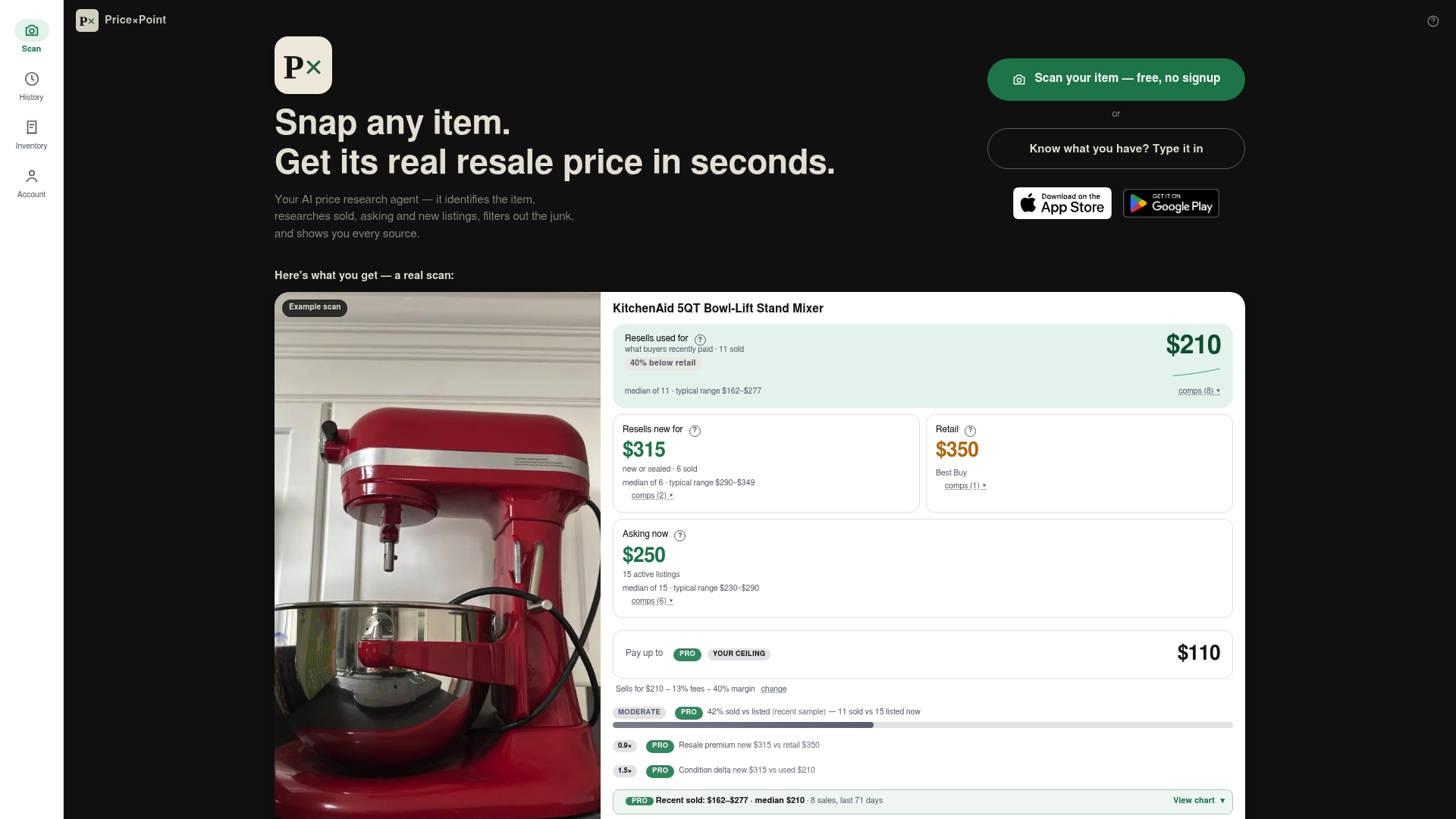
This fits naturally into the workflow above. Identify the model and color, check condition, then run the piece through PriceXPoint to confirm your estimate against real recent sales before you set a price or make an offer. Plans start with Basic at $4.99 per month, with Pro and Power tiers for heavier use, or you can buy a one-off token pack if you just need a handful of lookups. Check current plans and token pricing on the PriceXPoint pricing page.
FAQ
What is the best way to check what my Le Creuset is worth?
Pull several recent sold listings for the exact model, size, and color, then adjust for condition and completeness. Tools like PriceXPoint consolidate sold, asking, and new listing data with source links so you can verify each comp yourself.
Do rare Le Creuset colors really sell for more?
Discontinued or limited-run colors can command a premium over common shades, since classic colors like Flame, Cherry, and Cobalt Blue are widely available and don't always fetch the top prices. The exact premium depends on the specific color and current demand, so check recent sold comps rather than relying on a general rule.
How much does interior enamel damage lower resale value?
Interior enamel condition is one of the biggest factors in resale price, and even minor chips or crazing can meaningfully reduce what a buyer is willing to pay. Document any damage with close-up photos against a ruler or coin so buyers can judge the extent themselves.
Should I sell heavy Le Creuset pieces locally or ship them?
Heavy pieces like large Dutch ovens are often better sold locally or via pickup, since shipping is expensive and carries breakage risk. Rare colors with limited local demand may still be worth shipping to reach a wider pool of buyers.
How does PriceXPoint help me price a Le Creuset piece?
You photograph the piece or type its name, and PriceXPoint returns sold, asking, and new listing prices from multiple marketplaces with links back to each source. Plans start at $4.99 per month, or you can buy tokens for occasional lookups.