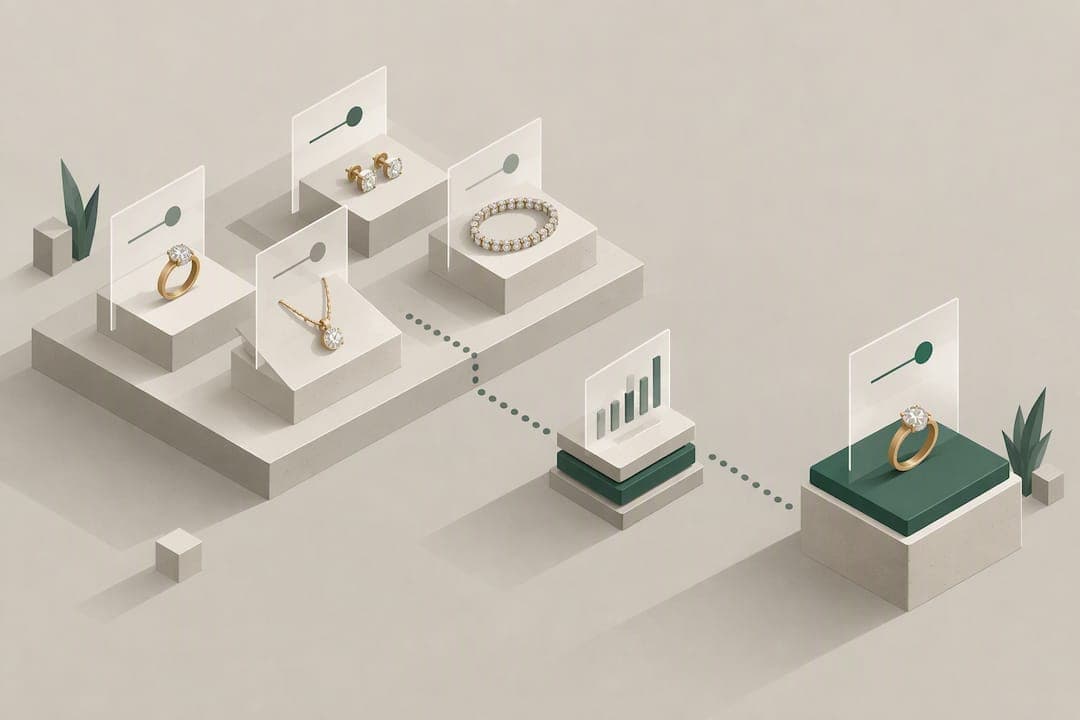
Jewelry price comes down to three layers: what it's made of (metal purity and gemstone quality), who made it and how well, and where you're buying or selling it (retail versus resale). Before agreeing to any number, locate the grading report or certificate and check recent sold listings for comparable pieces. Those two checks catch most overpaying and underselling mistakes before they happen.
TL;DR:
- Jewelry prices are heavily influenced by metal purity, gemstone quality, craftsmanship, provenance, and market channel, not just the sticker price.
- Confirm material details with grading reports and recent sold listings, as asking prices can be significantly inflated compared to actual transaction values.
- Lab-grown gemstones offer similar quality at lower costs, while estate sales and private-party markets can provide undervalued vintage or unique pieces.
- Appraisals for insurance are not suitable for resale valuation; use fair market value estimates based on recent comparable sales instead.
- Utilizing tools like PriceXPoint can help buyers and sellers set realistic prices by analyzing real-time sold listings across multiple marketplaces.
Table of Contents
- What drives jewelry prices: metals, gemstones, craftsmanship, and provenance
- How to estimate a piece's value now: certificates, sold listings, and adjustments
- Tactics to pay less when buying and to maximize what you get when selling
- When you need an appraisal and which appraisal suits your goal
- How PriceXPoint uses sold-listing data and AI to improve jewelry price estimates
- Author perspective: what budget-conscious buyers and sellers should do first
- FAQ
- Sources
What drives jewelry prices: metals, gemstones, craftsmanship, and provenance
Every piece of jewelry carries two kinds of value: the material it's made from, and everything added on top of that material through design, labor, and brand. Knowing where a piece sits on that spectrum tells you whether a price is fair or inflated.
Metal purity sets the floor. A karat mark tells you how much actual gold is in a piece: 24K is pure gold, while 14K is 58.3% gold mixed with other metals for durability. Sterling silver carries a "925" mark, meaning 92.5% silver. Platinum is typically marked with its purity percentage as well. The FTC's guidance on buying precious-metal jewelry explains that these marks directly affect material value and that sellers' policies around them deserve scrutiny before you buy. Weight matters too: a heavier 14K ring contains more actual gold than a lighter one, even at the same karat, so material cost scales with both purity and mass. On top of that raw material cost, retailers add making charges and markup, which is why two rings with identical metal content can carry very different price tags.

Diamonds are priced using the four Cs: cut, color, clarity, and carat. Cut affects how a diamond reflects light and is often the most visually impactful factor, even though it's easy to overlook next to carat weight. Color grades run from colorless to noticeably tinted, with colorless stones commanding the highest premiums. Clarity measures internal and surface characteristics, and carat weight has a near-exponential relationship with price since larger stones are rarer. A diamond that's slightly lower in one C but excellent in the others can sometimes offer better value than a stone optimized purely for carat weight.
Colored gemstones follow different rules. Color is the dominant factor in a colored gem's value, accounting for the majority of its worth, according to GIA's guidance on selling gemstones and jewelry. Origin can add a substantial premium on top of that: a sapphire from Kashmir, for instance, can command far more than a visually similar stone from a less prestigious source. A separate GIA analysis of colored gemstone value factors notes that cut and size each represent a smaller portion of value compared to color and origin. That means a budget-conscious buyer chasing size over color on a colored stone is often optimizing the wrong variable.
Design, labor, and brand name add a layer entirely separate from raw materials. A branded or artist-signed piece can sell for multiples of its intrinsic material value because the name itself carries recognition and resale demand. Condition and provenance shift price further:
- Vintage and antique pieces can carry collector premiums when they're rare, well-preserved, or tied to a notable design era.
- Signed pieces from recognized designers or houses often resell closer to their original price than unsigned jewelry of similar material quality.
- Wear, repairs, and missing original parts (clasps, boxes, certificates) reduce resale value even when the underlying metal and stones are intact.
- Rarity, not just age, drives collector interest: a common vintage piece won't command the same premium as a limited or discontinued design.
Understanding which of these layers applies to your piece, material, craftsmanship, or brand, tells you which comparison points actually matter when you check a price.
How to estimate a piece's value now: certificates, sold listings, and adjustments
Once you know what should influence a piece's price, the next step is building an actual number. That means separating documentation from valuation, then grounding your estimate in real transactions rather than asking prices.
Start with the paperwork. A diamond grading report from a lab like GIA documents the four Cs as objective quality information: cut, color, clarity, and carat. It is not an appraisal. As GIA explains in its appraisal tips, a grading report tells you what the stone is, while an appraisal estimates what it's worth in dollars, and the two serve different purposes. GIA itself does not issue appraisals, so if someone hands you a "certificate" with a dollar figure attached, confirm what kind of document you're actually holding.
With the quality documented, here's a practical process for reaching a realistic price:
- Confirm the metal and gemstone details against any certificate, receipt, or hallmark present on the piece.
- Search recently sold listings, not current asking prices, for comparable items in similar condition.
- Weigh multiple sold comps rather than anchoring on a single outlier sale.
- Adjust the comp-based figure for your piece's specific condition, mounting quality, and any treatments.
- Factor in which market channel you're using, since retail, resale, and private-party prices diverge significantly.
Sold prices matter far more than asking prices because anyone can list an item at an aspirational number. What actually transfers hands reflects what buyers are willing to pay today, which is the only number that predicts your own transaction. One of the clearest pricing traps involves appraisal type: insurance replacement appraisals commonly state values two to three times higher than what a piece would typically fetch on the resale market, according to GIA's appraisal guidance. An insurance appraisal is designed to cover full retail replacement cost, not resale proceeds, so using one to set a selling price almost guarantees disappointment.
Retail-to-resale markdowns are real and expected. A piece bought at full retail typically loses a meaningful share of that price the moment it changes hands again, since resale buyers are pricing against other used inventory, not against a jeweler's showroom markup. Adjust your expectations for condition issues like resized bands, replaced stones, or worn prongs, and factor in local demand, since a style that's popular in one market may move slower elsewhere. If a gemstone has been treated (common for sapphires, emeralds, and some topaz), that affects both price and your disclosure obligations if you're the one selling.
Tactics to pay less when buying and to maximize what you get when selling
Where you shop changes the price as much as what you're buying. Lab-grown diamonds and gemstones cost substantially less than mined equivalents with comparable visual quality, making them a straightforward way to stretch a budget on cut, clarity, or carat. Estate sales often surface well-made vintage pieces below their craftsmanship value because sellers price for a quick sale rather than maximum return. Private-party marketplaces cut out retail markup entirely, though they come with more risk around authenticity and no return policy. Trade channels, where dealers buy from each other, offer the lowest prices but typically require an existing relationship or trade license to access.
- Lab-grown stones: lower cost, same chemical composition as mined, but lower resale recognition among some collectors.
- Estate sales: often underpriced relative to craftsmanship, but require fast decisions and as-is condition.
- Private-party sales: no retail markup, but buyer bears more authentication risk.
- Trade channels: best prices available, but generally closed to non-dealers.
When selling, trade-in credit toward a new purchase often yields more value than a straight cash buyback, since jewelers can offer better terms on credit without taking on inventory risk the same way a cash purchase requires, per GIA's selling guidance. If a cash offer feels low, ask whether trade-in credit changes the math before walking away.
Sterling silver is a common place to spot inflated markup, since identical .925 items can sell at very different price points depending purely on brand name rather than material or craftsmanship. Before buying, ask sellers directly whether any stones are treated, whether the metal marking has been verified, and what the return policy covers, points the FTC's guidance on buying gemstones and diamonds specifically recommends confirming in writing.
For high-end or rare pieces, consider an auction house or a certified dealer specializing in that category rather than a general marketplace, since specialist channels tend to reach buyers who recognize and compete for rarity.
Pro Tip: Before paying a branded premium, price the same metal and stone quality unbranded to see exactly how much of the tag is name recognition.
When you need an appraisal and which appraisal suits your goal
Not every transaction requires a formal appraisal, but when you need one, the type matters as much as getting one at all. An insurance replacement appraisal states what it would cost to replace a piece at retail, which is why those figures run higher than resale expectations. A fair market value appraisal estimates what a willing buyer would actually pay, making it the right tool when resale, not insurance, is your goal.
- Get an insurance replacement appraisal when you're insuring a piece against loss or theft.
- Get a fair market value appraisal when you're planning to sell, donate, or divide an estate.
- Get an appraisal before using jewelry as loan collateral, since lenders typically require current documentation.
- Consult an auction house directly for consignment valuations rather than a standalone appraisal, since auction estimates reflect their own buyer pool.
- Update appraisals roughly every two to three years, since metal and gemstone markets shift and insurance coverage can fall out of step with current values.
Bring any existing grading reports and original purchase receipts to your appointment, since they speed up the process and give the appraiser a documented starting point. When vetting an appraiser, ask about their credentials and specialization, request a written report rather than a verbal estimate, and treat any promise of a "guaranteed" resale price as a warning sign. No legitimate appraiser can guarantee what a future buyer will actually pay.
How PriceXPoint uses sold-listing data and AI to improve jewelry price estimates
Grading reports and appraisals tell you about quality and estimated worth, but neither replaces seeing what similar pieces are actually selling for right now. That's the gap we built PriceXPoint to close. The app pulls instant access to sold, asking, and new listings across multiple marketplaces from a photo or a typed item name, with links back to the original listings so you can verify every figure yourself.
We filter out unreliable or misleading listings and weight sold prices as the core signal, since asking prices alone inflate expectations on both sides of a transaction. That filtering narrows the range of uncertainty around any single piece far more than eyeballing a handful of random listings.
The workflow runs in three steps: snap a photo or enter the item name, review the sold comps alongside condition notes to adjust for wear or missing parts, then set a realistic asking or offer price based on what buyers are actually paying. You can see this in practice on our sold listings for a Tiffany & Co. Return to Tiffany bracelet, where branded pieces often hold value differently than unsigned jewelry of similar material.

Author perspective: what budget-conscious buyers and sellers should do first
Skip the marketing claims and do two things: confirm quality through a grading report, then benchmark that quality against recent sold prices, not asking prices. Those two steps catch more pricing mistakes than any amount of haggling.
If resale is your goal, anchor your expectations to fair market value, not insurance replacement value. The gap between those two numbers is where most sellers end up disappointed. For anything rare or high-end, a specialist auction house or certified dealer will almost always outperform a general marketplace, since that's where buyers who actually want what you're selling tend to gather.
— PricexPoint
FAQ
What is the 2:1:1 rule for jewelry?
There's no single standardized "2:1:1 rule" recognized by major grading authorities like GIA or the FTC for jewelry pricing. If you've encountered this term from a specific retailer or guide, treat it as that source's own shorthand rather than an industry standard, and verify any pricing formula against actual sold listings instead.
How can I find out how much my jewelry is worth?
Start by checking any grading report or hallmark for metal purity and gemstone quality, then search recently sold listings for comparable pieces rather than relying on asking prices. A fair market value appraisal from a qualified appraiser gives you a resale-oriented estimate, while tools like PriceXPoint's worth lookup show real sold, asking, and new listings pulled directly from active marketplaces.
Where can I buy treasure-quality jewelry at a fair price?
Estate sales and reputable auction houses often carry well-crafted vintage or rare pieces priced closer to their craftsmanship value than new retail jewelry. Verify any piece's metal marks and gemstone treatments before buying, following the disclosure points outlined in FTC guidance on buying gemstones and diamonds.
Where can I buy affordable jewelry without sacrificing quality?
Lab-grown diamonds and gemstones offer the same material composition as mined stones at a meaningfully lower price, making them a reliable way to get more carat, cut, or clarity per dollar. Private-party marketplaces and estate sales can also surface underpriced pieces, though they carry more authentication risk than buying from a certified dealer.
How much does it cost to look up a jewelry item's resale value?
Pricing tools vary by provider and typically charge per lookup or through a subscription. On PriceXPoint's pricing page, plans run from a Basic tier at $4.99 per month to a Power tier at $24.99 per month, with one-time token packs also available starting at $5.99 for 100 tokens.